You are currently browsing the category archive for the ‘nature’ category.
All day the noise and smells from the roadwork behind my house assault my brain. Drilling, scraping, jackhammering, dumping, steamrolling, beeping. This has been going on for many months. They say it will be finished by the end of this year. Then the construction in our condo complex will make its way onto our block. The front porch of the house above ours is tilting downward. Sagging? Can concrete sag? To prevent the sudden collapse of the concrete onto our heads as we walk out of our front door, they installed two thick poles that frame our front door and theoretically hold up the dispirited concrete. Later, they added poles running diagonally from the front of our house to the cement stairs we walk down to reach our house. These poles prevented us from walking directly to our next door neighbor’s house. Instead we have to walk up our stairs and down theirs to get to the door that’s maybe six feet away from ours. More recently they installed large sheets of plywood next to our door and the neighbor’s door, and began to dig a hole through what was the walkway between them. I don’t know what the hole is for. It’s been there for months now.
At night the noise from within my head keeps me awake. Until the last couple years, falling asleep came easily to me, and I could do it under almost any circumstances. Now, the tiny blinking light from a digital device, the gurgle of the toilet running downstairs, the smell of my own sweat will keep me awake. As many nights as not I have to move to a different room because my husband is snoring. We’ve shared a bed for 21 years and I’m sure he didn’t just start snoring this year, but I’m no longer able to ignore it. He says I snore too, which may be true but he manages to sleep anyway.
Of course it’s not just the external stimuli that keep me awake. It’s also the trickster commonly called perimenopause. If you’re a woman my age and you’re experiencing almost any vexing symptom, it’s likely perimenopause. And it feels impossible to extricate the anxiety from hormonal roller coaster. It’s all in there, swirling around like ratatouille or risotto in my head, convincing me that it requires vigilance and constant attention, lest something boil over or burn.
Meanwhile, in my husband’s brain, insidious and mean-spirited demons, also known as glioblastoma, are at work. He is battling them with daily chemo pills and 30 doses of radiation, which surprisingly feels like nothing. He is feeling fine so far, after weeks of worrying that treatment would knock him out. I am holding my breath, wondering when the other shoe will drop. He is not working, which is understandably confusing for him. He’s had to work for the past three decades. Instead, he is making new friends. Our people have shown up for us in beautiful and powerful ways. Friends signed up to drive him to the hospital every day for radiation. Friends are coming over to play cribbage with him. Friends are taking him to his favorite park. Some of these folks he already knew. Some of them I knew but he had never met. Some of them were, honestly, just acquaintances or friends of friends or people on Facebook who we met 20 years ago, but now they’re real friends, because they are showing up.
My husband is an introvert. He cares about people and he cultivates relationships with people he volunteers and works with, and he is incredibly kind. But he’s often struggled in social situations where he feels like he isn’t being heard, or that his presence isn’t valued. Now, everyone tells him frequently and explicitly that he matters, that he is valued, and that they want the best for him and want to spend time with him and want to be of help. If only it didn’t take a life-threatening diagnosis to make this happen. In ordinary circumstances, it would likely be perceived (by many people, if not all) as awkward or odd to post on social media that you’re looking for good people to do fun things with your husband. But in this situation, it’s all good. He has often wondered (and worried) about what his legacy is, and if he’s made a difference in the world. Now he’s gotten hundreds and hundreds of affirmations and confirmations that his existence and his actions and simply his compassion and kindness have been known and felt and will have ripple effects far into the future.
While he was in the hospital, I embarked on some kind of fever pitch Marie Kondo quest to get rid of stuff from our house. We’ve always had a lot of clutter and I have always—constantly—steadily tried to purge things whenever possible. But this time around I was possessed by this fervor. Friends and family came over and helped me make decisions, organize, and physically remove junk from my house so I didn’t have to worry about it. Bags and boxes went to Goodwill. Bags and boxes were posted on Buy Nothing. I delivered donations to people I thought could use them. I cleaned, I consolidated, I threw away so much crap. Almost all of those piles of “we’ll figure this out later” are gone now. Not that our house is spotless or minimalist now, but I do feel a sense of relief that our existence is less crowded. It’s possible I thought that getting rid of all the unneeded physical stuff would also empty my mind of unnecessary garbage. And maybe in some way it did. Because something had to go to make room for the currently consuming thoughts of scheduling appointments and seeking support and following medication regimens, on top of the regularly scheduled concerns about parenting, paying bills, and that oft-mentioned and elusive “self-care” that I hear so much about. I went to the dentist today and learned that one of my teeth that already had a filling now has a cavity on its side so I will need a crown (or possibly a root canal!) and we’ve maxed out our dental insurance benefit. Does this count as self-care? Technically, I’m caring for myself, but it wasn’t terribly fun. I’ll keep working on that. Oh—I’m going to see live music tonight with friends. Much more pleasant than a root canal.
Between the time I started writing this and now, the noise has stopped. The construction workers have gone home for the day. The wind that’s been blowing leaves around has stilled. I’ll try to follow suit and allow my brain to quiet down as well. At least for a little while.
Share this:

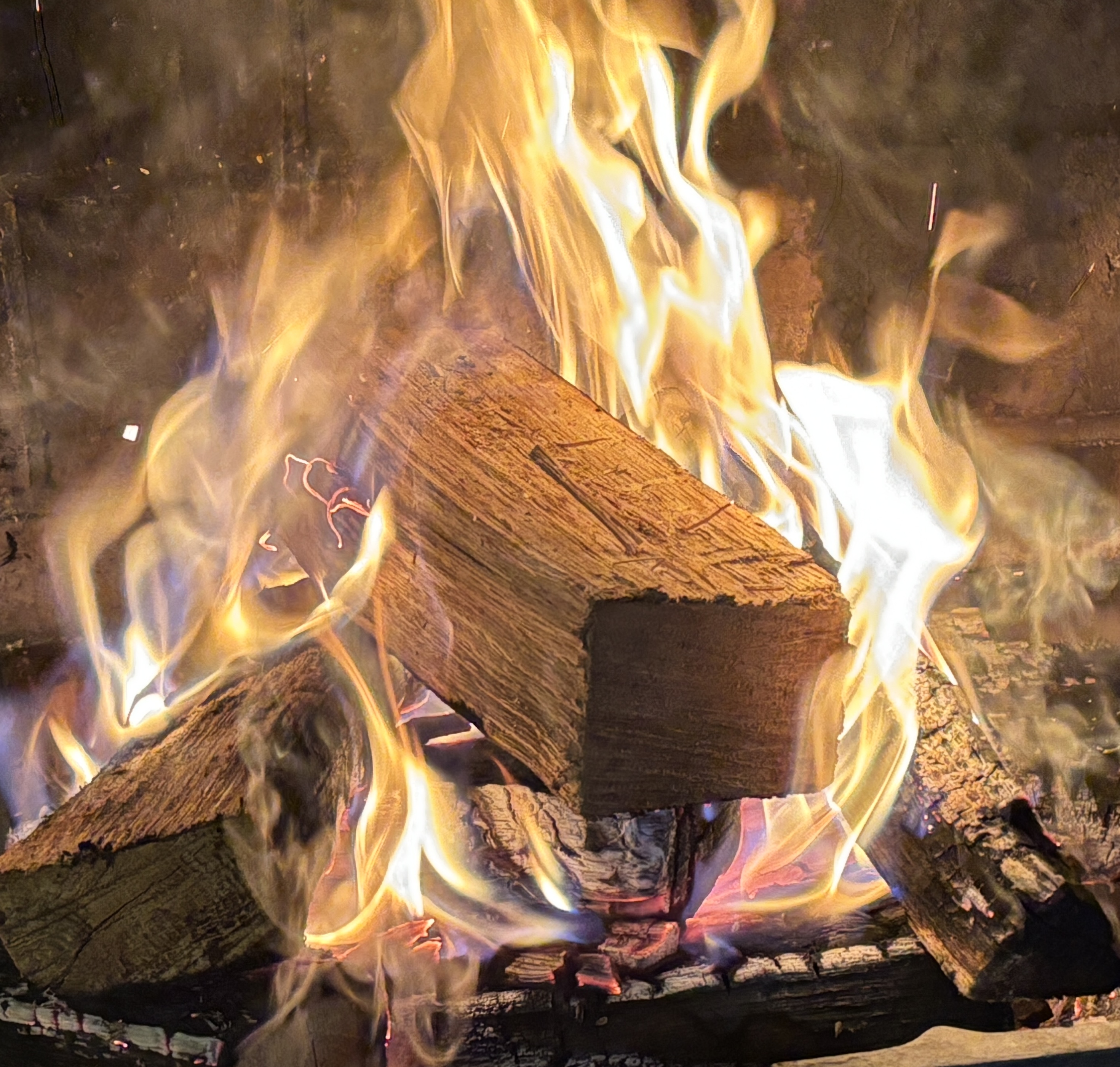
Listening to the fire wondering what exactly makes the sounds. Do flames make noise? Is it the reaction of the wood? Would it sound different if something else were burning? Trying and failing not to think about the devastation of Los Angeles. Wondering why it can be hard to get a fire you’ve built to catch while houses not intended to be burned seem to ignite so easily.
I didn’t know until yesterday what caused the sudden smoke. Every year when I build this fire it will burn respectfully for hours until without warning the room fills with smoke and the alarm blares and I have to open the windows and the door. I’ve just learned that this happened because of a particular piece of wood I’d added, which was not completely dry inside. What I still don’t know is why the dampness leads to smoke, or why one piece of wood stacked on top of another would be harboring remnants of water and not the piece below it or next to it. Is there a way to look at the wood and know what’s inside? Maybe someone who has spent more time with wood could discern it.
There is so much more I don’t know about the fire. How does the configuration of the logs determine the shape of the conflagration? What role does the oxygen play? Why are the ashes white and gray instead of the color of the wood? Why do the remains of a log look black and then collapse into dust when you poke it? How is the grate unaffected? Or does it eventually break down? This one is broken in part, but still solid enough to hold up the firewood. What makes some things burn and not others–like the grate, the screen, the fireplace tools. If a house burns down, do those pieces made of iron survive? If that is true, why don’t we make more of our existences out of iron? Or would it all eventually melt if left too long alone with the flames?
I think of a friend I used to have who always built the fires when we all went together to a cabin in the mountains. He was proud of his Boy Scout roots and seemed to relish the responsibility. I never asked him how he did it and he never stopped to explain and I thought it was some mysterious formula shared among scouts and certain dads and servants from novels about English aristocrats. There’s such an appeal to reading those books although I can never read them without imagining how awkward it would be to have a cadre of people catering to your whims and doing things for you that the rest of us do for ourselves, like getting dressed, and making dinner, and answering the front door. I think of a young woman wearing an unnecessarily frilly uniform making the rounds of every fireplace in the unnecessarily massive mansion every cold, damp morning, and laying out the kindling and the firewood just so, in case a member of the unnecessarily wealthy family decided to entertain themselves or others in that particular room on that particular day. I think about the classes of people whose money and power were passed down from one generation to the next while so many more others worked to make a living, or struggled to find work, or struggled to make a living.
And this is not unlike today, although many of the details have changed and the props and costumes and sets have changed. We still have the absurdly affluent doing whatever it takes to become more affluent and keep the serving class in poverty and with no choice but to serve or starve, or to serve and starve anyway. For centuries the divide and disgust was undisguised. Then in recent decades, discrimination became more discreet. And now, the curtains have been pulled back, but not to reveal sunshine–instead only darkness. The self-appointed wizards shout without shame that they will not tolerate anyone who is different from them–anyone who is not a straight, white, rich, egotistical man with anachronistic ideas. They will not allow anyone else to flourish, to thrive, to own their worth, to revel in their uniqueness, because if the rest of us claim our power and feel free to share our ideas, their power over us will diminish. Their ideas will be challenged. Their selfishness and greed will no longer be unhindered. They are damning the principles that many of us hold up as the ideals of humanity–the importance of including all because everyone deserves to be included and everyone’s contributions are needed, the theoretically democratic notion that all of us are created equal–possessing inherent worth and dignity–and entitled to treatment as such, and the seemingly simple but historically abused concept that our differences–the endless variations in how we look and act and think and communicate and love and live and move in the world–are extraordinary and awe-inspiring and cause for celebration, not condemnation.
The four cardinals perched in the tree outside this window have gone now. Where, I have no idea. What signals the birds to stop their feeding and flitting is unknown to me. I saw those cardinals as my ancestors, keeping watch or imparting a message I couldn’t quite understand today. But they’ve flown, leaving me to turn my focus back to the fire, gratefully absorbing its warmth while I wonder what happens now.
Share this:


I would get lost on a path
I would get wet under a roof
I would be jolted awake by silence
No one else can come to the rescue
It’s just me vs. the jackhammers
the narcissists the black holes the ignorant
the sirens and the mass of melting neurons
My cup has been emptied
Every drop leaking out before
I can bring it to my lips
I know I am not the only casualty
The brilliant rainbow and the fluffy white clouds are littered with bodies
I am not special
But I once was
Share this:

Instead of taking a last day of school photo, I’m tracking Zoe’s progress toward Central Virginia using the Find My Friends app on my phone. I take a screenshot when I see she’s arrived, her photo floating above the trees at the summer camp where she’ll be working as a counselor for the next 10 weeks. To prepare for this, we went to Costco for sunscreen, bug spray, socks, and other supplies. We ordered rain boots, a jacket, a rainbow of $6 tank tops, and her favorite hair product online. We emptied her trunk–originally purchased for her first time at camp in 2015 and still in astonishingly good shape–and filled it with carefully labeled and rolled-up t-shirts and shorts stuffed into gallon-sized Ziplock bags. We dug out of the closet her camp backpack, which still contained items from last summer, including a sock she’d been looking for everywhere. Last night I filled her tank with gas and this morning I ordered Starbucks for her to pick up at 6:30am on her way out of town.
I have done everything I can to make things easier for her, so she can go out and do hard things on her own.
She’s already done an admirable amount of adulting this year. She navigated junior year with challenging classes and two part-time jobs (three if you count occasional gigs babysitting for a family with three kids and a dog). She learned how expensive gas is (and therefore why it’s important to look for the cheapest gas) and how to get her car serviced and inspected on her own. She’s done banking and cooking and traveling out of state without her family and now she’s driven 90-some miles by herself four times in one week. She wrote her own end-of-the-year thank you note to her English teacher. She’s visited dozens of colleges and made thoughtful decisions about where she will apply this fall, demonstrating maturity and self-awareness.
And now she’s off to work and play for the summer. When she was a younger camper, I asked a few times if she would someday want to be a counselor, and she couldn’t imagine such a grown-up responsibility. Just like when she was a young martial artist and I asked her to picture herself as a black belt and she wasn’t ready to even conceive of the challenge. But her counselors knew that she would join them eventually. They could see it in her even when she couldn’t yet see it in herself. Last weekend she went down to camp for three days of staff training. She was nervous but ready. She was worried she wouldn’t have anyone to talk to or hang out with. By the end of the third day she had already made a friend who she didn’t want to be apart from for the two days she would be home before returning to camp. Thank goodness they are reunited now.
The evolution of parenting takes you from solving all your child’s problems–once you discern what they are–for them to figuring out, one by one, which problems they are ready to take on themselves. This requires careful observation and immense amounts of patience and often guidance from other people who’ve been through it before and can see things more clearly than you can. And as they get older, paradoxically it gets harder. I’d heard that adage from older parents since my kids were small–“little kids, little problems, big kids, bigger problems,” but of course I didn’t believe it until my kids were big. Making the decisions about what decisions to let them make for themselves is actually a lot more overwhelming than changing diapers, if less smelly.
At this point I feel like most of what we can do is gently and as subtly as possible guide them toward what we think would be good paths for them to explore. We are not the type of parents to force them into anything, barring what is required by law or basic human needs. We’ve taught them everything we know (for better or for worse) and to think for themselves. We’ve also taught them that we will always unconditionally be here for them when they need us. And that we trust them to make good decisions, and know that sometimes they won’t, because sometimes we don’t, because we’re human. So hopefully we’ve taught them how to learn from their mistakes. Or at least how to pick themselves up and dust themselves off and keep going.
So this summer while Zoe is working as a camp counselor, I hope she has fun–both with the other counselors and with the kids she will work with. She probably has no idea that so many young kids will look at her as a role model, and talk about how cool she is long after they’ve gotten home from camp, and introduce their friends back home to the music that Zoe introduced them to. I hope they come to her with problems and she helps them figure out what to do, or takes them to whoever can. I hope she learns incredible things from the 70+ other counselors who are there from all over the world, and from however many campers pass through her cabin or the archery range or the arts and crafts building throughout the summer. I hope she sees and hears stories and perspectives that will change the way she thinks and that she will never forget. I hope she tries things she’s never tried before. I hope she can shake off the mistakes she makes, because I’m sure she’ll make them.
I could not be prouder of her, or more excited for what lies ahead for her this summer. And I know I’m going to miss her like crazy. Patience has never been my strong suit, but I will have no choice but to wait for her to be ready to share the stories of her adventures. I know both of us can do hard things.
Share this:


I’m molting
Shedding haphazardly and with
intention
depending on the day
I’m curious
wondering what
will grow in next
Feathers jewel toned or silvered
Shiny scales smooth or gently textured,
inviting you to brush your fingertips
lightly across them
I’m musing on which
spells or incantations
learned or improvised
I might whisper or chant
to shape
my new incarnation
plain and bejeweled
soft and fluffy
lined and spotted
strong and supple
until I molt again
This metamorphosis is not for you
© 2024 by Betsy Rosenblatt Rosso
Share this:

If we want to support each other’s inner lives, we must remember a simple truth: the human soul does not want to be fixed, it wants simply to be seen and heard. If we want to see and hear a person’s soul, there is another truth we must remember: the swoul is like a wild animal — tough, resilient, and yet shy. When we go crashing through the woods shouting for it to come out so we can help it, the soul will stay in hiding. But if we are willing to sit quietly and wait for a while, the soul may show itself.
~Parker Palmer
This is a talk I shared during a Sunday service at the Unitarian Universalist Church of Arlington as part of the church’s series on the six sources of Unitarian Universalism. My writing was inspired by this source: direct experience of that transcending mystery and wonder, affirmed in all cultures, which moves us to a renewal of the spirit and an openness to the forces which create and uphold life.
For two years I spent a good chunk of my waking hours talking and writing about this church. As a member of the ministerial search committee, I met with my fellow committee members weekly, and we worked doggedly to discern what the congregation needed in a new minister. Surprise–Unitarian Universalists have a lot of opinions! Our committee had to digest, synthesize, and transform what we learned into UUCA’s church profile, an incredibly elaborate version of a job announcement. Then we spent months reviewing applications and sermons of prospective ministers. This role and its attendant responsibilities were heady–and hard–and ultimately richly rewarding. It was a privilege to serve UUCA in this capacity, and if I’m being honest, it made me feel kind of important. It’s easy for me to make the mistake that what I do for a community is more valuable than who I am.
Now, raise your hand if you were part of UUCA in any way in the spring of 2020. You may recall that, just as our committee was preparing to recommend Rev. Amanda as the candidate for our senior minister, the pandemic shut everything down. All of our plans to introduce her to the congregation, celebrate a new beginning, and enjoy the fruits of our committee’s labor were funneled online or simply forgotten in the crush of a worldwide crisis.
I know every one of you here in the sanctuary or watching online has a story like this–or a very different one. There are likely a million variations on the theme of how things changed in 2020. Now, four years later, I am still feeling the effects of those changes, for better or worse. Maybe you are too. Who knows how long the ripples will expand throughout our lives?
Church has always meant community for me. Throughout my life, community often outweighed theology in my choice of a congregation. I feel lucky to have found in UUCA a place where I feel both a sense of belonging and alignment with the tenets of the faith. From the moment I arrived at UUCA, I felt seen. I felt valued. I understood that my being here mattered.
Unfortunately, for a good portion of the years since 2020, I lost that sense of belonging, not just here, but really anywhere. Does that sound at all familiar to you? The isolation of the pandemic was soul crushing. And I am a big believer in silver linings. I love my family so much, and I am so thankful for the hours we spent playing board games, watching movies, making art, and going on hikes. But the four of us did not a whole community make. I need different kinds of people and multiple communities to nurture various aspects of my personality and my identity. All of us do.
There’s a wonderful graphic novel series called Heartstopper, which is now an amazing Netflix show, that my kids adore and introduced me to and which I love now as well. First of all, Heartstopper creator Alice Oseman does a masterful job portraying the pain and beauty of making your way as a teenager, particularly as you come into your gender identity and sexual orientation. Secondly, in book four of the series, Charlie–one of the main characters–comes face to face with what feels like an insurmountable struggle. His boyfriend, Nick, wants so badly, as all of us do when we love someone, to be able to fix Charlie’s problem, but of course he can’t. And Nick realizes that, no matter how much he loves Charlie, he can’t and shouldn’t be everything to Charlie. Charlie needs a community to help him. As do we all.
I took baby steps to return to UUCA. I co-facilitated a covenant group for parents of gender-expansive kids. That was an easy one–a way to test the waters by creating a small community. Coming back to church on Sunday mornings, however, was a challenge. The first few times I tried, I felt confused and out of sorts. When we were all masked, I felt embarrassed because I didn’t recognize people who I had known for years. That kept me home for a while longer. When I came back again, I felt like I had somehow forgotten how to interact with other humans. Once after the service ended, I just sat in the back and cried. Holly saw me and sat with me. She didn’t ask me to explain myself. She just kept me company.
When I heard about the LEAD program that Greg and LeeAnn were running, I knew I had found a path back to community. I wasn’t sure what my role was supposed to be in the congregation, but this was an opportunity to meet new people and reconnect with old friends, so I took it.
The irony–or perhaps the true intention–of joining LEAD was being reminded that I didn’t need to have a leadership position or a particular responsibility in the congregation to belong. When I arrived for that first workshop, I was so warmly welcomed back. Wendy and Kristen, among other folks, let me know that they were genuinely delighted to see me again, without asking why I hadn’t come back sooner, or what I was going to be doing for the church now that I was back, or without any other expectations of me whatsoever. After the session, I gave Kristen a ride home and we sat in my car, parked outside her house, for an hour catching up. It was such a relief to renew that connection. I know I’m name dropping a lot this morning. I intentionally want to recognize the people who have shown me so much grace and love in building and rebuilding community here.
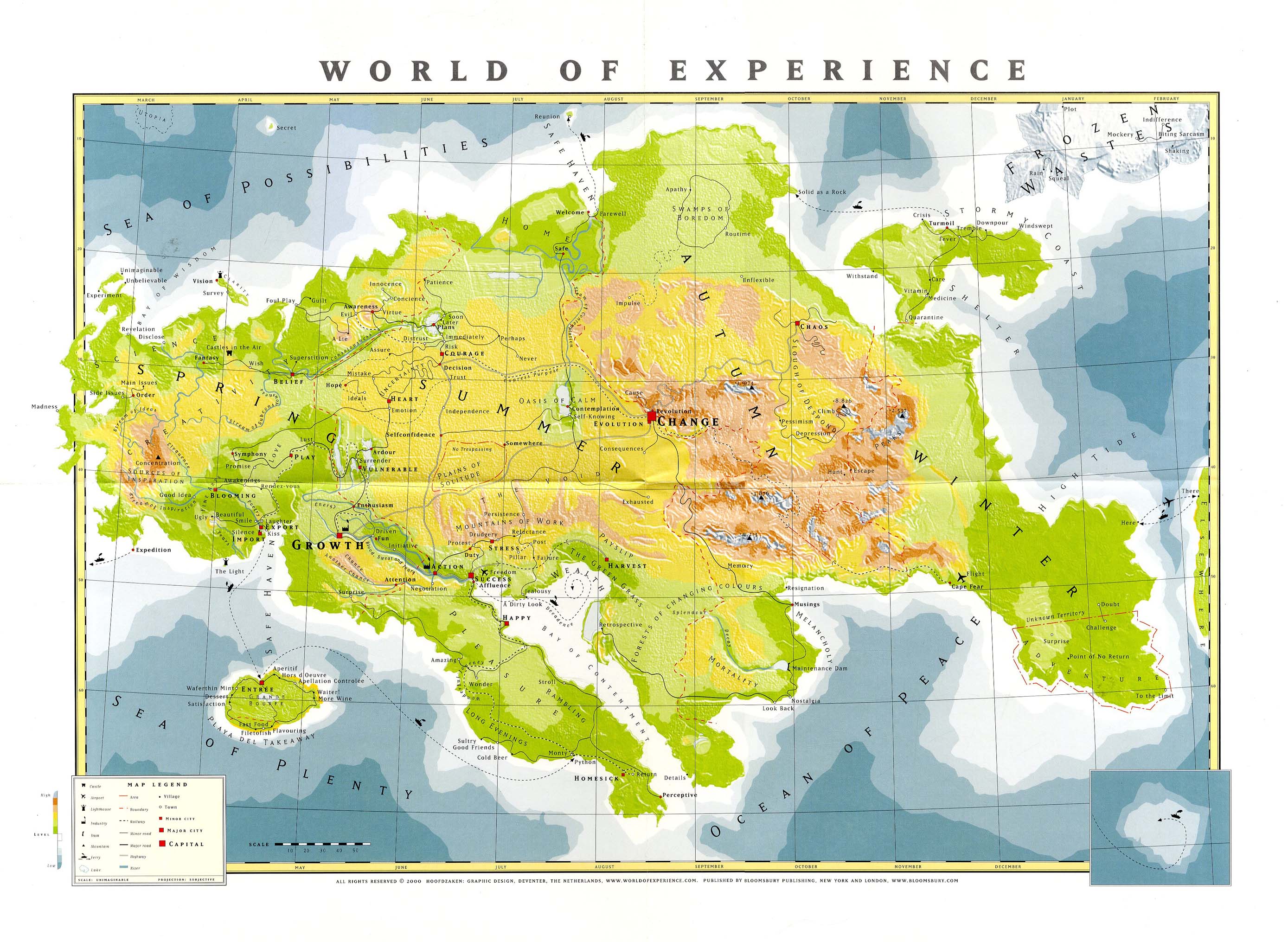
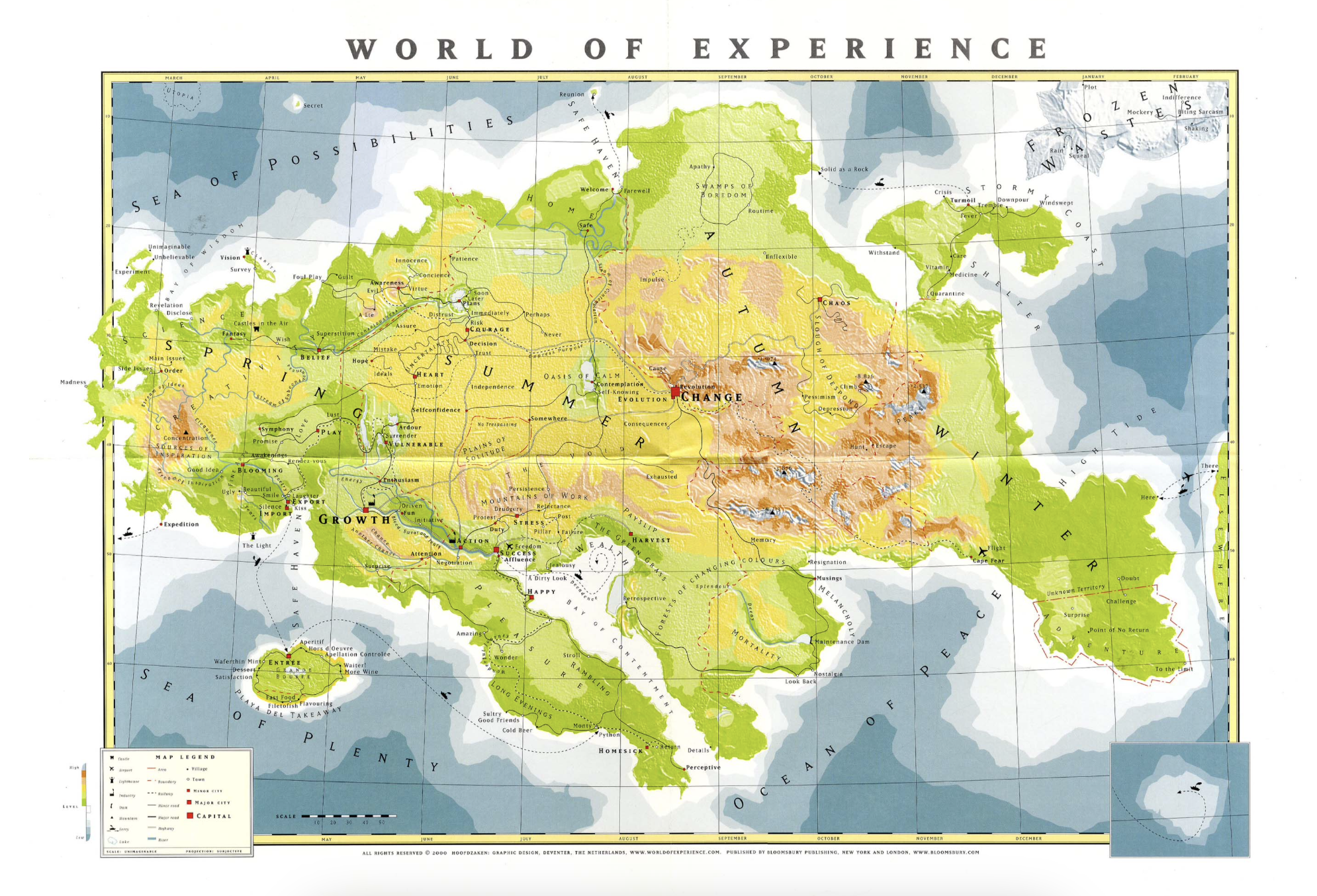
One of my favorite activities during the LEAD workshops was using the World of Experience as a tool to examine where I’ve been and where I want to go. If you’ve never seen it before, you can check out the World of Experience at the LEAD table in the fellowship hall after the service. In the meantime, picture this in your mind. A map that, at first glance, looks like it could be a two-dimensional representation of the Earth. On closer inspection, however, the familiar continents and oceans are replaced by other geographies, named for elements of the human experience. For example, the sea of possibilities, mountains of work, and plains of solitude.
On several occasions we used the World of Experience as a way to articulate the challenges or adventures in our past and present, and where we hoped to navigate in the future. In all of my conversations, my partners shared their journeys with unapologetic honesty, and invited the same vulnerability from me. The guiding principles practiced during the LEAD series were touchstones created by Parker Palmer and the Center for Courage and Renewal. One of these is “no fixing, saving, advising, or correcting each other.” In our type A problem solving culture, that’s a particularly tough one for many of us to follow, but it’s so important. Participating in the LEAD workshops reminded me that this congregation is a safe place for me, where my wild animal soul can show itself. That’s how I experience moments of mystery and wonder–when I feel truly seen and understood.
This year I attended General Assembly, the Unitarian Universalist Association’s annual gathering, for the first time. I had long wanted to experience GA, but to be honest I was also super anxious about it. When I arrived in Pittsburgh and checked into my airbnb, I texted Gay and Elizabeth. What am I doing here? I asked them. Of course, they were both kind and reassuring. I felt their hugs from 250 miles away. Then I arrived at the convention center, and I found Diane and Bruce and I knew everything would be ok. I had tacos with LeeAnn, and reconnected with folks who I first met at UUCA but who have moved on to other churches, and I made new friends. Knowing I was among so many people who share my UU values and commitment to repairing the world was exactly what I needed and hoped to experience at GA.
Of course, church is far from the only community that can nurture the soul. Some communities are intimate and some are vast but both can offer sustenance. My 16-year-old is a member of the seemingly infinite community of Swifties–devotees of pop star Taylor Swift. While her knowledge of Taylor Swift’s catalog and every minute detail of every concert on the Eras Tour may verge on obsessive, it is clear that she and other Swifties find joy and meaning in listening to the music, experiencing the music, and talking about the music with each other.
The community my 10-year-old thinks of as their second home is SMYAL, a DC-based organization that provides resources, connections, and activities for LGBTQIA+ young people ages 6 to 24. My kid has found kindred spirits, role models, and unwavering and unconditional support for their whole self. Their wild animal soul feels free to lead a dance party whenever they’re with their SMYAL peeps.
As Parker Palmer wrote, “If we want to support each other’s inner lives, we must remember a simple truth: the human soul does not want to be fixed, it wants simply to be seen and heard.” I am thankful to be a member of this and other communities where my soul can be seen and heard. Cultivating that kind of community–something greater than any of us individually, which can only be created with intention and love–is a sacred act. Sometimes we can build community, and other times we just stumble into it. We don’t always know where we will find community, or where we will experience that sensation of truly belonging, but we surely know it when we feel it. Some may call that providence, or divine intervention. To me, that certainty of belonging is a product of the mystery and wonder of the universe. Whatever you call it, I wish for you the comfort, safety, and nourishment of community, wherever you may find it. May it be so.
Share this:

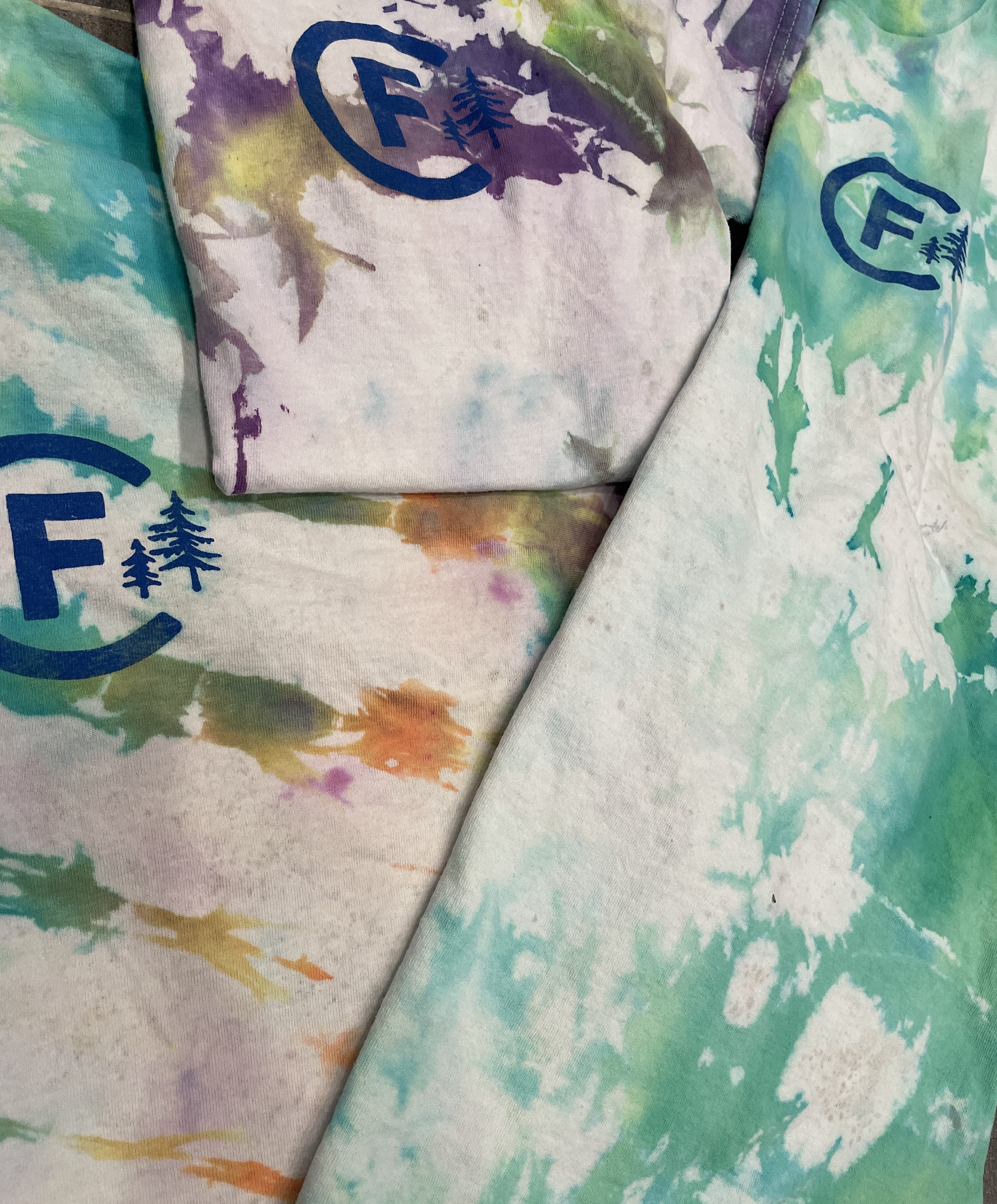
When you tie-dye a t-shirt, they tell you to keep it in the plastic bag for at least 24 hours, or several days more, to allow the dye to soak into the fabric so the colors of your shirt will be vibrant. What they don’t tell you is that after those first several days have come and gone and you’ve more or less forgotten about the tie-dying because you’re home from family camp and fully transitioned into school year mode, your wet shirt, which has been scrunched or twisted up and secured with rubber bands and enclosed in a sealed ziploc bag, will become fertile ground for colonies of mold. Or possibly mildew. I am honestly not sure of the difference, when it comes to gross spots growing on something I was planning to put on my body. Either way, when you remember to take the shirts out of their bags and start the chiropractic appointment-inducing process of rinsing them out in the bathtub, and you see the grayish brownish spots clustered across the shirts, you make a face that indicates an unpleasant mixture of disappointment, frustration, and disgust.
Yuck.
Your research reveals that a possible remedy could be soaking the shirts in vinegar. Although in your gut you feel like they’re too far gone, you have to try. Surprisingly, three different stores you visit are completely out of white vinegar. Finally, you order some online from Target, in one of your midnight shopping sprees where you make other exciting purchases such as frozen burritos, saltines, maxi pads, paper towels, and Cinnamon Toast Crunch. You are living the high life.
Because that’s the way you roll, it takes a few more weeks for you to actually soak the shirts, although they have been rinsed and are dryish and you are pretty sure no longer nurturing the fungus (if it even is fungus?) besmirching them. You’re just feeling kind of defeated by them. The giant jug of vinegar sits in the hallway, mocking your bad decision making and poor time management skills.
As time passes, you think a lot about preschool. One of the many mantras at your kids’ amazing cooperative preschool was “process, not product.” Emphasis on the kids doing whatever they wanted to do with the materials put in front of them — or that they unearthed while playing in the mud garden or tromping through the woods — rather than the ultimate creation of something recognizable or a specific end goal. This is a good rule of thumb for life with little ones, as products rarely–if ever–turn out as expected. Also a good thing for adults to remember, although we are usually held to the standard of producing some kind of acceptable end result. And process is how you learn. Process is the journey. Process is the sensory experience of getting your hands dirty–or stained with dye in the arts and crafts cabin at camp. You recall the peaceful hour spent with your nine-year-old carefully choosing tie-dye patterns, helping them rubber band the shirts, and finding exactly the right color combinations. You each made a shirt or two and a couple bandanas. The bandanas are easy but not quite as satisfying as a result.
If you’re being truthful, each of you already has several tie-dye shirts in your drawers, that you made at previous family camps or on summer vacations during the pandemic. So you’ve enjoyed the process many times before, and even managed to make some decent shirts.
Now that you have soaked the shirts (and stunk up the house with the aroma of vinegar) and washed the shirts and dried the shirts, you discover that three of the shirts still have enough remaining mold (or mildew!?) stains to make them unwearable. Somehow one shirt emerged unscathed, as well as two bandanas.
You wonder if there is anything useful to do with the rejected shirts. You already have enough dust rags for a squadron of Cinderellas. You fleetingly imagine cutting up sections of the shirts that aren’t stained and sewing them into something else. But what? A doll-sized blanket? Plus, you can’t sew. You think of your friend who can sew and wonder what she would do. In addition to sewing, she is an expert at tie-dying, and you’re certain she would never have made the mistake of allowing tie-dyed t-shirts to languish in their baggies until they grow things. But her kids attended that same preschool, and you know she would appreciate your “process not product” attempt at consolation.
Lately I’ve made a lot of mistakes. Somehow more than what I expect from myself, as if I am more than human. My new mantra, although I am many decades out of preschool, is process, not product. I am still learning.
Share this:


This morning I took the mouse that had been squeaking all night (because it was stuck in a glue trap designed to catch roaches and other insects) and carried it into the backyard and pried its little paws and matted fur off of the glue and left it in the grass. I have no idea if it will survive, but I didn’t know what else to do. I couldn’t kill it, although we’ve had mousetraps all over our house for months because of a persistent colony. When the mousetraps kill them, I bag the bodies and the traps and put them outside for the trash. The line between active and passive destruction is thin.
The mouse did not ask to be made into a metaphor. And yet.
There is nothing particularly wrong with me, any more than anyone else. I am more sensitive than most. I have a sleep disorder and other minor afflictions. But this world. The conflict. The cruelty. The confusion. The things that smell bad. It’s like layer upon layer of glue traps of injustice and illness and insecurity. No amount of alliteration can save us. Nothing we can do eliminates the suffering.
Today is Easter. Resurrection–to me–is another metaphor. An opportunity to remind ourselves of all the possibilities of life that emerge from the darkest of days.

This week we spent a few days at the beach. For most of our trip, it was cold and windy. Sitting on the sand and watching the waves was lovely but a bit chilly. The boardwalk was deserted at first. We spent time inside, reading and writing and drawing, and then it warmed up. Everyone else noticed too, and there were suddenly plenty of people on the beach, even though it was still too cool to swim. Who knows what all those other people were doing inside while it was cold, but when the sun came out, they did too. Possibilities opening up like the tulips that lined the sidewalks.
Traveling magnifies the intensity of parenting by 1,000. There are even more decisions than usual to make. Calculations become more complex when you factor in everyone’s desires, preferences, and needs–whether they are stated explicitly or you happen to know them or you’re somehow supposed to guess correctly what they are. Traveling reminds me that I cannot make everyone happy, and that no matter how much I might want to, it’s ultimately not my job and not within my power. I do a lot for my kids, but I can’t (and shouldn’t) do everything. The Easter Bunny did not come to our house today. I warned the kids yesterday that the Bunny was just not available this year, and that there were plenty of other celebrations happening, as both of their birthdays and mine are this month. They both said repeatedly that it was fine and they didn’t mind. Easter is much more of a cultural event to them than a religious one. They are both savvy about the nature of middle-of-the-night visiting creatures (our resident mice never bring us any treats). We just splurged on treats during our beach trip, and we still have plenty of candy left over from their Christmas stockings. Niki said, “I get it. The Easter Bunny is stuck in traffic, has bills to pay, calls to make.” They understand. They are not deprived. I had a couple flashes of guilt, but they were fleeting.
This afternoon I stepped outside to see if the sticky mouse was still in the grass where I had left them. I did not see any sign of them. I hoped that they managed to find refuge somewhere (other than back in our house, maybe?) and some way of removing the residue from their paws. I wonder if the mice still in here are missing that little dude. I can’t think too much more about this or I will become very sad. Absolutely there are much larger and more pressing problems in the world, but it comes back once again to my compulsion to bear witness to suffering, and examination of my role in alleviating it. The mouse remains a metaphor.
Share this:

In the end, his love of animals won out over his distaste for getting dirty. Zeke’s sixth camp of the summer was Native Animal Explorers, run by an organization called Fish and Explore. He spent every day wading knee-deep into creeks and streams and marshes, climbing over rocks, and making himself at home in the woods. He found hellgrammites and velvet mites (both of which I had to look up) and crayfish and tiny toads. He said he spent a whole day with another camper who had sharp eyes—she would spot the toads and he would catch them. He said he has quick hands. He held (non-venomous) snakes that the counselors found. He let little caterpillars crawl around on his hands. One caterpillar reportedly pooped on Zeke three times. He and his fellow campers named some of the crayfish—Big Daddy, Big Boy, Tiny Tim, Tiny Guy—you sense a theme? Zeke reported that getting pinched by a crayfish did not really hurt. The day they explored the Billy Goat Trail he came home with scrapes all over his legs. He did not complain. And this is a boy who is sensitive to pain and most minor injuries.
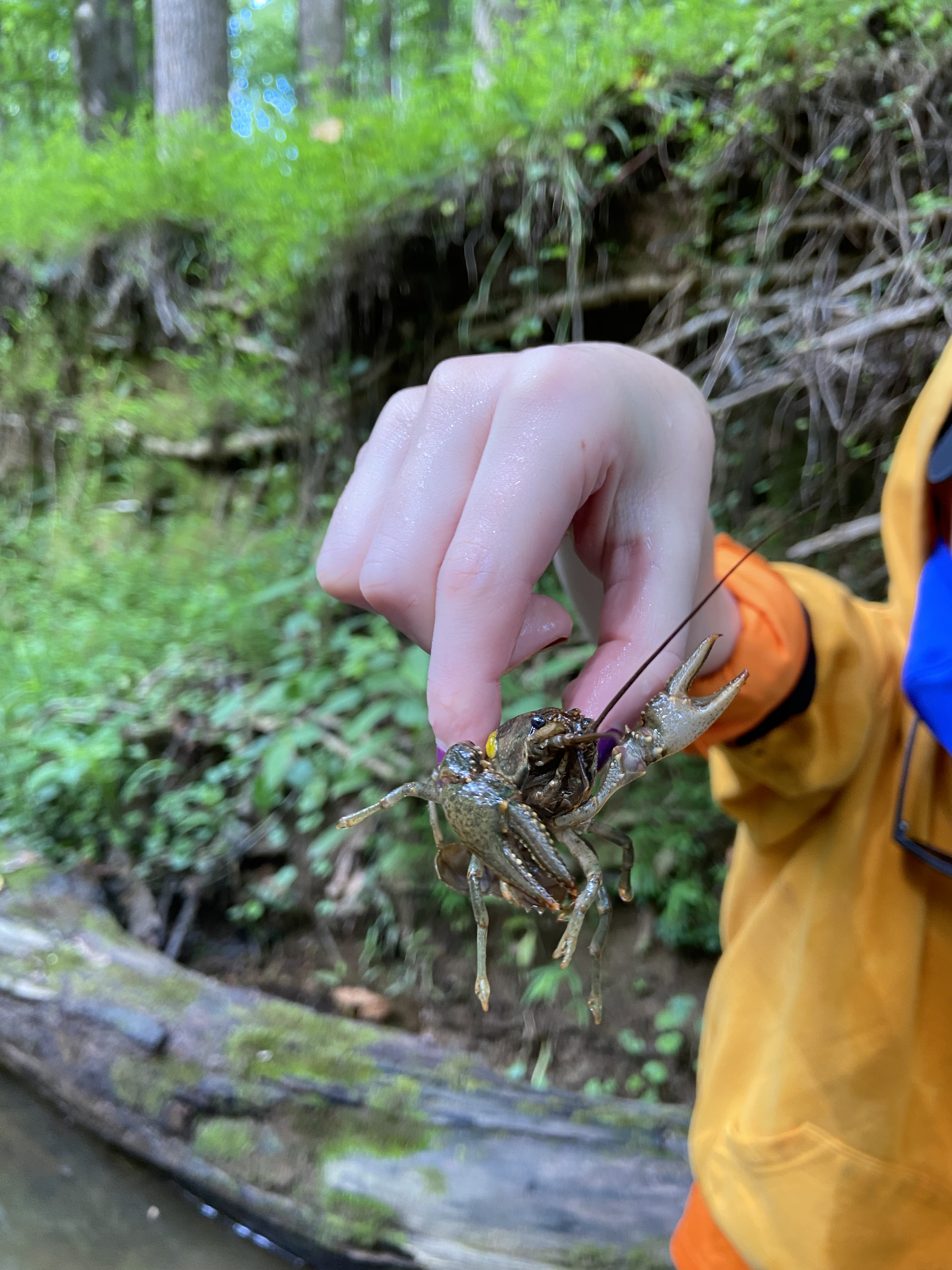
He did complain, however, that the days were tiring—and they were long and included a lot of driving to the various parks. And that changing clothes in the camp van was annoying, which I’m sure it was. But he didn’t seem to mind getting wet and dirty and he definitely loved finding and observing and holding the creatures. He smuggled a hellgrammite home in his water bottle on the last day of camp. We observed it in a Tupperware container filled with water and then we convinced Zeke to let the little guy be free.
This weekend we are in West Virginia, hiking to waterfalls and mountain lookouts, and exploring little towns. Zeke is reminding us that if we see any animals, he can identify them for us and probably catch them for closer observation. He wants to go off trail, which we’ve reminded him is not safe when you’re 3,000 feet up. He is ready to wade in the water, although so far we haven’t had a chance. He did go outside and dance in the rain on the porch of our Airbnb, though, which is pretty close.
I insisted we register him for three active camps if he was going to do a week of Minecraft camp. He readily agreed—and so he did fencing and archery, a theater camp that involved much more choreography than he was prepared for, and Native Animal Explorers. He did like fencing and archery, and when we watched the Olympics, he taught us quite a bit about the kinds of bows and arrows and fencing weapons that the athletes were using. And he came home with a multitude of bruises on his legs from fencing but didn’t complain then either. The theater camp was a little iffier. He said he didn’t like the theme—Broadway Disney—because too many of the girls in the camp were obsessed with Disney princesses. Although Zeke likes to sing and dance at home—or truthfully dance anywhere—he didn’t care for the choreography or the choice of songs, even though he likes Disney movies as much as the next kid.
He’s been saying he wants to do more archery and fencing, so I consider that a success. And of course he loved the Minecraft camp. Apparently, he actually learned some coding, so that’s a bonus. The most disappointing camps were the ones that did not at all match what was advertised. One was Safari Robotics, run by SciGenius. The campers were supposed to learn about safari animals and observe how they moved, and then create robots to imitate the animals’ movement. Instead, what they did was dig through bins of Legos to find parts to create Lego robotics projects they followed the instructions for. Zeke has nothing against Legos or Lego robotics, but he’s done those camps before, and that was not at all what he signed up for. Surprisingly, the best thing about that camp was that during breaks, they played soccer. As a result, Zeke said he wanted to join a soccer team this fall. I have been (gently) asked him since kindergarten if he wanted to play soccer on a team and he has always politely declined. But now he has a jersey hanging on the back of his door and we are eagerly awaiting an email from his coach letting us know when and where to practice.
The other disappointment was Steve & Kate’s Camp, which had been fabulous years ago when Zoe attended. The whole thing with Steve & Kate’s is that kids get to choose what they want to do—among a wide variety of interesting activities including bread baking, sewing, karaoke, board games, and more. We understood that because of COVID they were forced to change the model somewhat, putting the kids into cohorts instead of letting them roam free. But they also seemed to limit what the kids could do. Zeke spent so much of the day playing on an iPad that he got bored, which I did not think was possible when Zeke has a screen in front of him. One other option was playing in the gym—with a ball—by yourself. They weren’t allowed to throw the balls to anyone else. And Zeke is tall but not quite tall enough to be able to shoot baskets at standard height net. So what are kids supposed to do with a ball in a gym by themselves for hours? The only unusual diversion was inflatable axe throwing at an inflatable target. Bread making, sewing, maker space, and other promised activities were never offered. Zeke was signed up for five days at Steve & Kate’s, but since you pay by the day and they give you refunds at the end of summer for days you didn’t use, we pulled him out for the last two days.
I have already started a summer 2022 spreadsheet because that’s who I am, and I don’t want to forget what we learned after this summer. And I would like to think that by next summer COVID won’t actually be a terrifying and constantly looming threat, but I am not confident about that. But meanwhile, I am thankful that Zeke had the opportunity to be out in the world this summer, trying some new things, making new friends, and learning new skills. If we’re lucky, all that will continue when school starts in a couple weeks. Fingers crossed.

Share this:

My brain is doing that thing again. Thoughts, ideas, worries, questions careening around and crashing into each other, leaving shattered fragments that no one is coming to sweep up. Neurons are firing and everything is aflame.
Here are some of the things I’m thinking about.
- Why do we think everything at Target will be cheap but we end up always spending so much money there?
- Why did we think COVID would be over by now and unsurprisingly it’s getting worse? I am depressed by the thought that this will be the third consecutive year that COVID impacts our kids’ school years (not to mention everything else, but I am particularly concerned about my kids. And everyone’s kids.
- Will we ever be able to stop dealing with COVID?
- Do other people have to reschedule everything as often as I do?
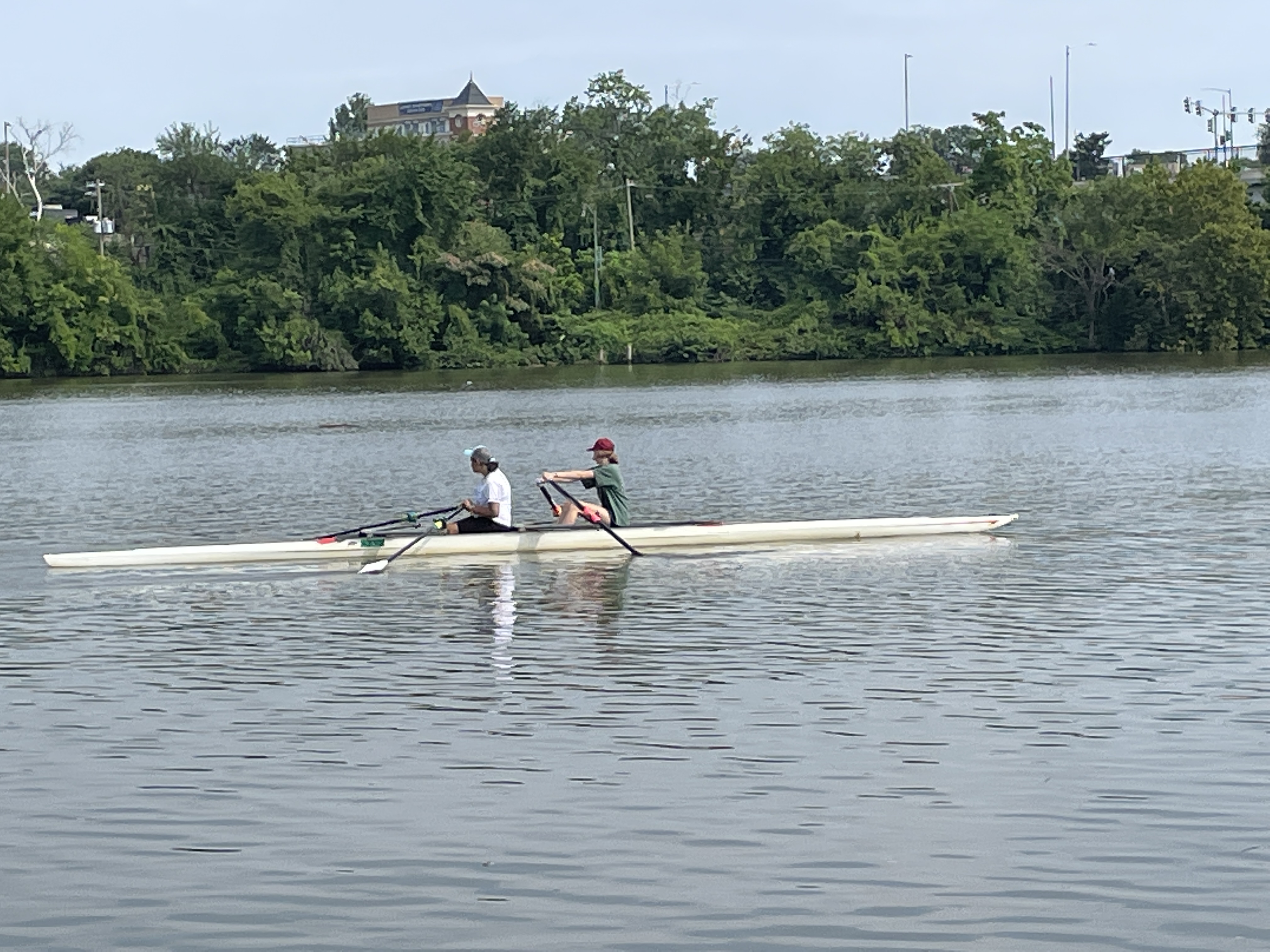
- I am pleased with myself that I convinced my teenager to do something she didn’t want to do–wear a baseball hat–while learning to row, to keep the sun out of her eyes.
- I am proud of her for spending 10 hours this week on the Anacostia learning to row. The sport is fascinating to me, and I love the idea that she knows how to carry a boat into the water, and row down a river, and it’s beautiful to watch. I am hoping she will join the high school crew team this year.
- Zoe and her friend are in our kitchen right now doing some activity that they have not revealed. They said it’s a science experiment. Maybe they’re making a cake?
- Part of me wonders if I’ve spent so much time away from church during the pandemic that I won’t go back.
- I have used various products and still cannot seem to get our towels to smell good. What’s the secret?
- I worry that as a straight, cis person, there are just too many things I will never understand.
- I am proud of myself that I haven’t had a Coke or Dr. Pepper in several years. I was addicted to caffeinated soda for most of my life. I wish I had quit sooner.
- There are only 38 days left till the first day of school! We need supply lists! We need schedules! We need orientation! Zoe’s never walked around in her new high school! Zeke needs an amazing teacher and some awesome friends! So many expectations and unknowns.
- I am amazed at all the things my children know.
- I am surprised by how much I enjoy reading Rick Riordan’s books with Zeke.
- Yesterday at the library I ran into a friend who was there with a large group of children who were looking for books. My friend’s colleague said she needed extra hands to help the kids find books they wanted. So Zeke and I helped them look up titles and authors on the computer, find them on the shelves, and browse through the shelves for books we thought they would like. Both Zeke and I really enjoyed it. I told the person who was wrangling the kids to let me know next time they were going to the library so we could meet them again.
- Zeke is going to play soccer this fall and I am so excited for him, and truthfully, looking forward to being a soccer mom again (in addition to being a mom who plays soccer). I really hope he has a fabulous coach and great teammates and makes friends.
- I loved the new Black Widow movie and I am thinking about getting some new piercings in my ear in the style of Natasha and Yelena. I’m probably never going to get a tattoo, so why not have a little more bling in my ears?
- Zoe is leaving on Sunday for sleep away camp for two weeks. It’s a long time away from us after a year and a half of always being with us, except for an occasional sleepover with family. She asked me to write her notes in advance for her to open every day while she’s there, in addition to the email and mail I will send her while she’s gone. People say it’s better for campers to immerse themselves in camp life instead of thinking too much about home, but Zoe seems to need the connection. This will be her sixth year, so I guess she knows what she needs.
- This could be a whole different post, but I’ve been thinking a lot about what a particular experience it is to go clothes shopping with a teenager who 1) has a much different body type and confidence in her body than I did when I was a teenager and 2) has a much more sophisticated sense of style than I did when I was a teenager.
- I am so angry and tired of the racism and sexism and ableism that continue to dominate the narrative in sports, especially visible now as the Olympics are starting. Women aren’t allowed to wear shorts because men want to see them in bikinis, or they want to wear shorter shorts that are easier to run in but they are deemed too short for running. They can’t wear swim caps that protect natural Black hair. They can’t compete because they are trans or they smoked pot months ago in a place where it was legal. Or they are Paralympians who are deaf and blind and have to quit the team because they’re not allowed to bring a personal support person to Tokyo to help them navigate the city. I feel like there are just dark, smoky back rooms full of crotchety old, straight, cis, white men who are doing their damnedest to make life as hard as possible for women, women of color, LGBTQIA+ women, and women with disabilities.
There’s more that I’m thinking about, but I need to get dinner started. That’s another thing to think about.

 You Ask a Lot of Questions