
You are currently browsing the tag archive for the ‘love’ tag.
They cut down all the rose bushes in the backyards. Our townhouse shares a long and narrow backyard with all the houses on our block, which backs up to a major road. A few weeks ago they boarded up all of our front doors and fenced off the front of our houses to do some major reconstruction, so we have to use the back door and walk around the block to get to our cars. They built scaffolding so the people in the houses upstairs from ours can climb in through their balconies. I moved all my pots of flowers and herbs to our back patio, so at least there’s a little beauty there. And until last week we had rosebushes lining the brick wall separating our yards from the sidewalk. But they chopped them all down. Maybe this was in an effort to make it easier to walk back there, especially when you are pulling a wagon full of groceries in or recycling out. I would rather enjoy the roses and have to squeeze around them, but no one asked me.
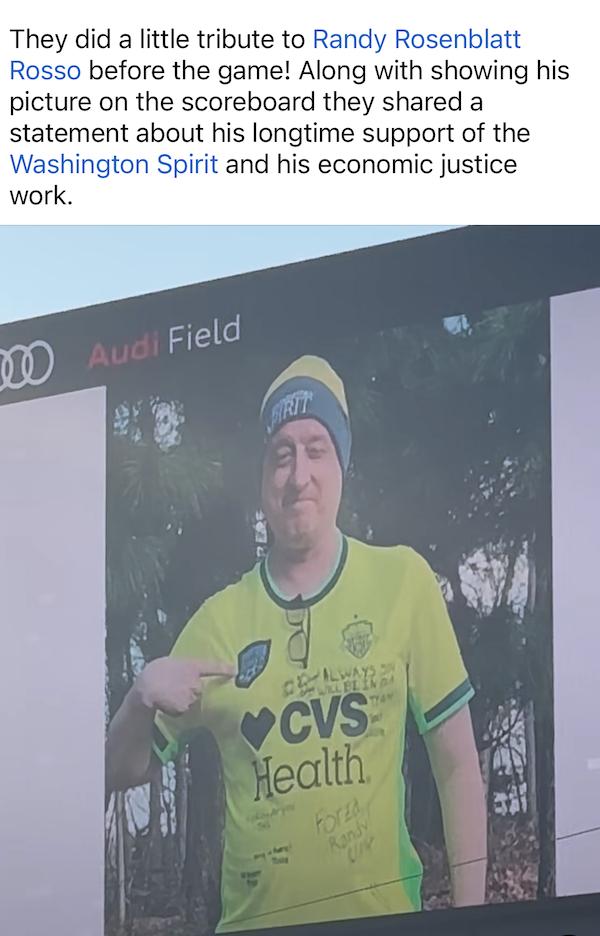
In the seven weeks since Randy died I have had to inform numerous strangers about this so they can help me with various accounts and transactions. I’ve said it so many times to customer service representatives and the next agent available that sometimes it sounds like a flimsy excuse even to me. Of course, this situation is covered in their protocols, and they express their condolences and I have to say thank you. Transitioning and reconciling all of Randy’s subscriptions and accounts and the shared bills that he’s been paying for 22 years has been vastly more complicated than I ever would have anticipated. Even though we both knew the life expectancy with glioblastoma is not good, we thought we had more time. We thought sitting down too soon to share the passwords and add my name to everything would be acknowledging that he was about to die and it would somehow come sooner. This was clearly foolish on our part.

We buried Randy, in a green cemetery, under shady trees and overlooking the Blue Ridge Mountains, 10 days after he died. Walking from the car to the burial plot and seeing the shroud containing his body was one of the few times I’ve cried in front of anyone else. I’ve done a lot of crying in my car. We wore his soccer jerseys and tossed flowers into the grave after we shared stories about him.
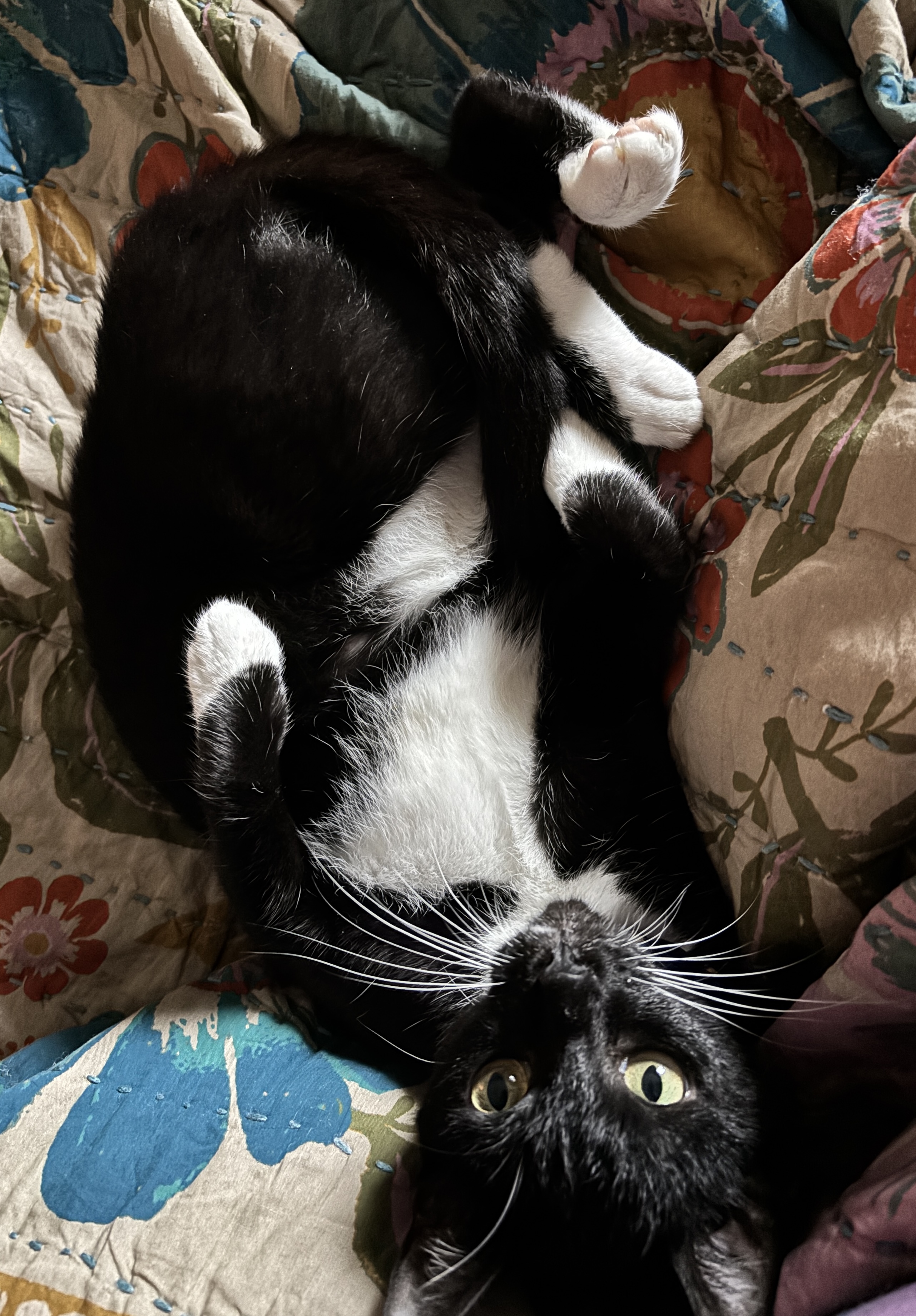
The days between then and the celebration of life were a blur of processing, preparation, and people coming in and out. And we adopted a cat. A few days after Randy died, the kids and I were sitting around staring at each other, or into space, or maybe we were talking about something that I don’t remember. I asked, “should we get a cat?” The kids pounced on the idea. We spent several hours at the animal shelters near us, and now a friendly and feisty tuxedo we call Tina Fey lives in our house. I wish Randy were here to play with her.
For some reason I thought that things would get easier after the service. The days that followed might have been quieter, but they were harder. The celebration of life was extraordinary. The church was packed. The music, which was immensely important to me because it was so important to Randy, was perfect. Everyone’s remarks were exactly what needed to be said about Randy’s life. At the reception I stood and talked with people for two or three hours straight. My friends took care of everything so I didn’t have to worry about it. People were so kind. I met friends of Randy’s for the first time. Friends of mine who I hadn’t seen in more than a decade came out. And every word that everyone said reminded me of exactly how much I had lost and all of those joyful, silly, and special moments I would never experience again.
Grief never goes away, they say, it just gets more manageable, or maybe less overwhelming. I’ll have to report back to you on that in the next 20 or 30 or 40 years. One day recently I received two separate packages in the mail, both unexpected. One was from a friend of Randy’s who lost her first husband many years ago, soon after they were married. The other was from a friend’s mom, who lost her husband a couple years ago. Both packages contained small, thick paperback books, the exact same size and with covers in similar color palettes, offering 365 days of guidance, wisdom, and affirmations on grief and loss. So far I’ve read one page from one of the books, which was a quote by Mister Rogers, whose words are always gentle, thoughtful truths. Some day I will read more. The books will stay on my nightstand.
I talked a lot with a counselor from the Smith Center for Healing and the Arts about anticipatory grief. The Smith Center is an excellent organization in DC that provides support and services for people living with cancer and their loved ones. Before I started meeting with the therapist there and joined the online group that she facilitated, I didn’t know there was such a specialty as psycho-oncology. Now that I’ve worked with her, I feel like everyone whose life is impacted by cancer should have a psycho-oncologist. It turns out, of course, that when you have cancer or you’re taking care of someone with cancer, there is such an enormous list of things you have to think about and figure out and deal with that you don’t even realize what else you need or understand how to find it. But if you find yourself in this situation, first, I’m sorry, and second, ask a friend to do some research for you into these kinds of services.
Anyway, anticipatory grief. Knowing what’s coming even though you don’t want to think about it. Wondering (obsessively?) what exactly it’s all going to look like and how it’s going to happen even though there’s no way to know for certain. Trying to prepare for a worst-case scenario while hoping for something better and while everyone around you seems to be hoping for a miracle. Trying to figure out what your journey is and what your person’s journey is and where they differ and where they intersect. Trying to figure out who needs to know what and when, as if you can protect other people from their own grief. I always imagined that it would be easier for those left behind by someone who died after a long illness because they were expecting the death and it wasn’t a shock. I don’t know what gave me that idea, because it is stupid. There is no easier or harder–it’s all terrible. Maybe it’s less surprising or shocking in the moment, but that doesn’t make it feel any less sad. Part of that anticipation is also the day-to-day grief for the person you once knew–in my case the person I fell in love with 23 years ago–because that person has left the building, never to return. Some part of me kept thinking, as Randy got sicker and sicker and became less and less like himself as I knew him, that I had already mourned for him. Not so much. Feeling frustrated by the changes in his behavior and personality and feeling the anguish of watching him suffer didn’t reduce the sum total of my grief by knocking off some points in advance. Apparently it doesn’t work that way.
Now I am watching my mom suffer. She turned 81 the day of Randy’s burial. I was supposed to join the rest of my family in celebrating her with dinner at the assisted living place where she and my dad have been for a few months. Not surprisingly, I had a migraine and I couldn’t go. Not long after that, she was admitted to the hospital with an infection. And weeks later, she is still hospitalized. She is not dying, but she is not living in any meaningful sense of the word. She’s had some good days and enjoyed visits from family and friends. She was especially happy when her brother and sister-in-law and nieces and nephews came up for Randy’s service and were able to spend many hours in her hospital room. But lately she has not been eating or drinking and she is confused and upset most of the time. When I went to visit her today, I stood in the hallway outside her room and heard her crying and yelling at the nurse because she wanted to get out of bed to use the bathroom, but she hasn’t been able to get out of bed since she’s been in the hospital.
My mom has had so many and so many kinds of health challenges throughout her life that it’s kind of astounding that she’s survived all this time. The way that major illnesses and chronic conditions have impacted her ability to function and severely limited her independence and autonomy has been heartbreaking. Her world has shrunk and her anger has grown. In particular, since her stroke in summer 2024, she hasn’t been the same. I have tried so hard for so many years to do everything I can think of to support her and my dad. Things have been so rough for both of them in the past few years. Today after I stood in the hallway outside my mom’s room, I had to go out of the unit and into the waiting area and cry. I texted my dad that I didn’t know how he manages to sit with her every day. He told me that being with her is an act of love, even if she doesn’t or can’t recognize it. I finally went back to her room and sat with her and held her hand while she talked like someone talking in their sleep. She said words and phrases that I caught, but I couldn’t follow an overall thread. When she seemed upset I tried to comfort her, but I didn’t know quite what she was upset about. Often she would stop talking and close her eyes and her mouth would be open and her brow furrowed. Everything about her face looked tense and uncomfortable. I moistened one of the little foam swabs on a stick and put it on her lips and in her mouth so she could moisten them. I listened to her. I tried to make affirming noises or responses to her rambling. I was reminded of Randy’s final weeks when he would talk about things that made absolutely no sense or were completely out of context and I just said things like, “right, I understand, that makes sense. I get it” over and over again.

You know how when you’re in the middle of a specific life experience, that circumstance suddenly seems to surround you? As in, every book I pick up or movie I watch now seems to involve someone who is very sick or dying or someone who is experiencing huge grief and loss. Even in the real world, I’ve heard so many stories from people who say it was such a privilege for them to be with their parent or spouse or best friend in that person’s final months or weeks or days or hours. How there were laughter and tears and wonderful stories shared and boundless love affirmed and angels and unicorns and rainbows. I guess I don’t hear or read as many stories of watching this person–who brought you into the world and loved you unconditionally and gave you everything she could–grow weaker and more fragile and lose the larger than life personality and warmth and wit she was known for. It doesn’t feel sacred to see her suffer.
I should have known something was really wrong with my mom a few weeks ago when we told her we were getting a cat and she was excited for us, because she does not like cats. She has never liked cats. She is 100% a dog person. And truthfully, deep down I am not a dog or a cat person. I am a baby person. I make friends with every baby or toddler I encounter and I would love to have more babies and toddlers in my life in some other way than raising them myself. But I understand what animals can do for people, and Tina Fey has been therapeutic for the kids and me, even if she can be a little bitey at times. She must have intuited that I was writing about her because she literally just jumped on the bed and onto the keyboard and when I pushed her off she tried to eat my toes. Otherwise, she’s very soothing like I said.
At the suggestion of a friend, I got a bird feeder for the backyard, so Tina Fey can look outside at the birds. My friend said it’s like cat TV. There is also a bunny that lives in the backyards that hasn’t been scared away by the construction. Niki took a picture of it yesterday. Maybe tomorrow I’ll buy some colored chalk and we’ll draw flowers or self-portraits on the bricks. If I knew how to knit I could yarn bomb the scaffolding. If I can make myself get out of bed tomorrow and create something, it might be a good day.
More about Randy and his life
Blog post about Randy by Tiffany Tagbo
Order of service from the celebration of life
Randy’s celebration of life
Share this:

All day the noise and smells from the roadwork behind my house assault my brain. Drilling, scraping, jackhammering, dumping, steamrolling, beeping. This has been going on for many months. They say it will be finished by the end of this year. Then the construction in our condo complex will make its way onto our block. The front porch of the house above ours is tilting downward. Sagging? Can concrete sag? To prevent the sudden collapse of the concrete onto our heads as we walk out of our front door, they installed two thick poles that frame our front door and theoretically hold up the dispirited concrete. Later, they added poles running diagonally from the front of our house to the cement stairs we walk down to reach our house. These poles prevented us from walking directly to our next door neighbor’s house. Instead we have to walk up our stairs and down theirs to get to the door that’s maybe six feet away from ours. More recently they installed large sheets of plywood next to our door and the neighbor’s door, and began to dig a hole through what was the walkway between them. I don’t know what the hole is for. It’s been there for months now.
At night the noise from within my head keeps me awake. Until the last couple years, falling asleep came easily to me, and I could do it under almost any circumstances. Now, the tiny blinking light from a digital device, the gurgle of the toilet running downstairs, the smell of my own sweat will keep me awake. As many nights as not I have to move to a different room because my husband is snoring. We’ve shared a bed for 21 years and I’m sure he didn’t just start snoring this year, but I’m no longer able to ignore it. He says I snore too, which may be true but he manages to sleep anyway.
Of course it’s not just the external stimuli that keep me awake. It’s also the trickster commonly called perimenopause. If you’re a woman my age and you’re experiencing almost any vexing symptom, it’s likely perimenopause. And it feels impossible to extricate the anxiety from hormonal roller coaster. It’s all in there, swirling around like ratatouille or risotto in my head, convincing me that it requires vigilance and constant attention, lest something boil over or burn.
Meanwhile, in my husband’s brain, insidious and mean-spirited demons, also known as glioblastoma, are at work. He is battling them with daily chemo pills and 30 doses of radiation, which surprisingly feels like nothing. He is feeling fine so far, after weeks of worrying that treatment would knock him out. I am holding my breath, wondering when the other shoe will drop. He is not working, which is understandably confusing for him. He’s had to work for the past three decades. Instead, he is making new friends. Our people have shown up for us in beautiful and powerful ways. Friends signed up to drive him to the hospital every day for radiation. Friends are coming over to play cribbage with him. Friends are taking him to his favorite park. Some of these folks he already knew. Some of them I knew but he had never met. Some of them were, honestly, just acquaintances or friends of friends or people on Facebook who we met 20 years ago, but now they’re real friends, because they are showing up.
My husband is an introvert. He cares about people and he cultivates relationships with people he volunteers and works with, and he is incredibly kind. But he’s often struggled in social situations where he feels like he isn’t being heard, or that his presence isn’t valued. Now, everyone tells him frequently and explicitly that he matters, that he is valued, and that they want the best for him and want to spend time with him and want to be of help. If only it didn’t take a life-threatening diagnosis to make this happen. In ordinary circumstances, it would likely be perceived (by many people, if not all) as awkward or odd to post on social media that you’re looking for good people to do fun things with your husband. But in this situation, it’s all good. He has often wondered (and worried) about what his legacy is, and if he’s made a difference in the world. Now he’s gotten hundreds and hundreds of affirmations and confirmations that his existence and his actions and simply his compassion and kindness have been known and felt and will have ripple effects far into the future.
While he was in the hospital, I embarked on some kind of fever pitch Marie Kondo quest to get rid of stuff from our house. We’ve always had a lot of clutter and I have always—constantly—steadily tried to purge things whenever possible. But this time around I was possessed by this fervor. Friends and family came over and helped me make decisions, organize, and physically remove junk from my house so I didn’t have to worry about it. Bags and boxes went to Goodwill. Bags and boxes were posted on Buy Nothing. I delivered donations to people I thought could use them. I cleaned, I consolidated, I threw away so much crap. Almost all of those piles of “we’ll figure this out later” are gone now. Not that our house is spotless or minimalist now, but I do feel a sense of relief that our existence is less crowded. It’s possible I thought that getting rid of all the unneeded physical stuff would also empty my mind of unnecessary garbage. And maybe in some way it did. Because something had to go to make room for the currently consuming thoughts of scheduling appointments and seeking support and following medication regimens, on top of the regularly scheduled concerns about parenting, paying bills, and that oft-mentioned and elusive “self-care” that I hear so much about. I went to the dentist today and learned that one of my teeth that already had a filling now has a cavity on its side so I will need a crown (or possibly a root canal!) and we’ve maxed out our dental insurance benefit. Does this count as self-care? Technically, I’m caring for myself, but it wasn’t terribly fun. I’ll keep working on that. Oh—I’m going to see live music tonight with friends. Much more pleasant than a root canal.
Between the time I started writing this and now, the noise has stopped. The construction workers have gone home for the day. The wind that’s been blowing leaves around has stilled. I’ll try to follow suit and allow my brain to quiet down as well. At least for a little while.
Share this:


You know why I post about all these queer books and authors? Because reading builds EMPATHY and UNDERSTANDING. Reading helps us understand the thoughts and ideas and experiences of all kinds of people. Reading fiction achieves this as much or more than reading nonfiction, because it’s more accessible to many readers.
Anyone who questions why they would read about queer people if they’re not queer needs to examine this logic. Humans have been reading about people who are not like them as long as there have been books because humanity is made up of a million flavors of people and it’s a blessing and a gift to be able to learn about and explore the things we have in common and what makes us unique. We gain insights and new perspectives by reading about people from different periods in history, different places, different cultures, different religions…why wouldn’t we read about people with different gender identities and sexualities? The world is populated by billions of extraordinary ordinary people whose lives have meaning and value.
Ideally, we all have the opportunity to get to know lots of kinds of people in real life. But when that’s not possible, there are always books. I urge you, even if you’re not queer or don’t have queer loved ones (that you know of) or don’t have queer kids, read some of the books I’ve recommended. And if you DO know or love kids or adults who are lgbtqia+ please read some books I’ve recommended. Or other books by or about lgbtqia+ people. If you work with children or young people in any capacity, read some of these books. There are a ton of great book lists.
If you want to be an ally, learn more about the people you say you support. That’s a place to start.
Share this:


At my Unitarian Universalist church, we have a ritual every Sunday of lighting a candle of compassion, accompanied by a few words of meditation or prayer or our hopes for a better world–whatever you want to call it. Yesterday I served as the lay leader for the service and this is what I wrote when I lit the candle.
Each Sunday we light a candle of compassion for those in our community and around the world who are struggling or suffering. At this moment in history, the number of people who fall into those categories seems to be growing exponentially.
As UUs, we strive to cultivate equity, justice, and generosity, among other essential values. Meanwhile, a lot of people with a lot of power are working hard not only to remove these words from our shared vocabulary, but also to destroy their meaning and manifestation in our society. Which means we need to dig deep for compassion and hold tight to love. Our faith compels us to double down on kindness and refuse to abandon our commitment to our fellow humans.
It’s not always easy, though, as we bear witness day after day to selfishness, callousness, and utter disregard for humanity. So we must start by offering compassion to ourselves. We need to do what it takes to care for ourselves if we are to continue caring for others.
We share our compassion with all people who are isolated, persecuted, marginalized, or abused because of who they are or how they look or where they live or what they believe or their desire to be fully themselves. We hope for them mercy, relief, wholeness, and ease. We extend compassion to those who feel demoralized, devalued, and lost, and wish for them affirmation and encouragement and the understanding that something better is possible.
And, as we begin our celebration of pride month, may we offer our compassion to our LGBTQIA+ siblings and those who support them. We hope for them not just safety and belonging, but also love, and joy. We strive for a world where members of the queer community are not just accepted but authentically embraced.
May we extend compassion to all who need it, including ourselves.
Share this:

I have heard that the cracks are where the light comes in
And in the places we were broken we are stronger
That’s what the poets say
But someone has to sweep up the pieces, to find every last one, and set to work with toothpicks and superglue
Because we the people are shattered, scattered, smashed to bits
According to the sages
our scars make us who we are
But to have a scar we must stop the bleeding and heal the wound.
For now the blood still flows
the wounds are open
the battle continues


