
You are currently browsing the category archive for the ‘anti-racism’ category.
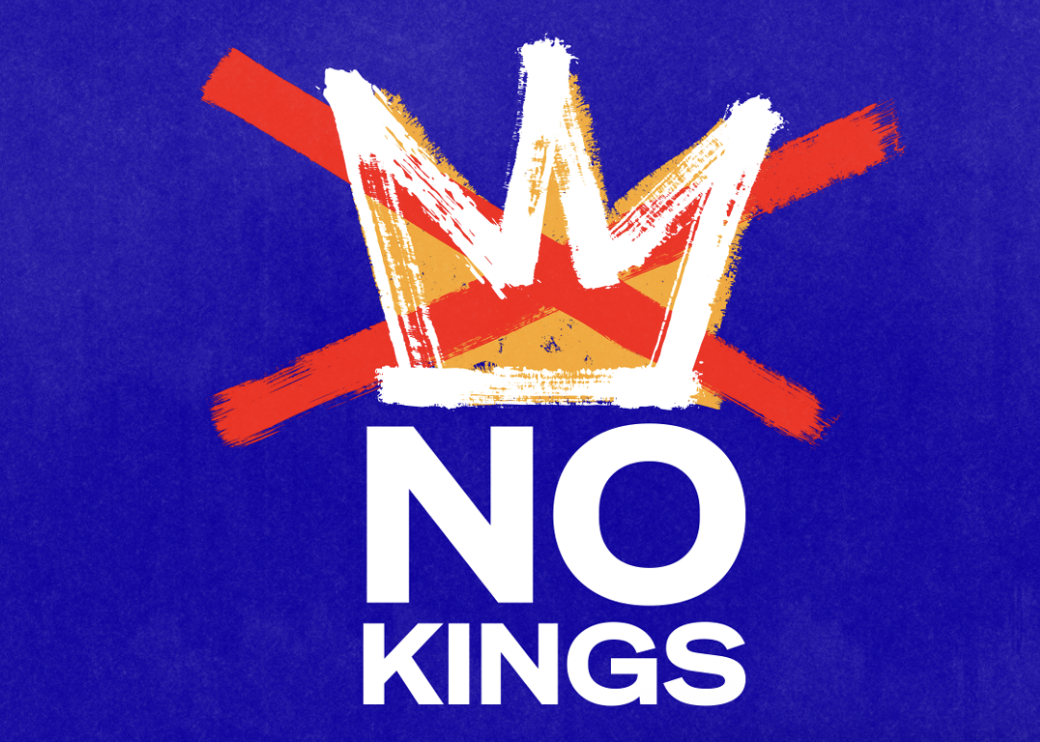
While Trump was pouting at the lack of public enthusiasm about his tank parade, I drove down Langston Boulevard from where it begins in Arlington just across the Potomac from the District of Columbia, all the way through the City of Falls Church into the Falls Church part of Fairfax County. The peaceful protestors lined the streets for more than seven miles.
Here’s my quickly assembled video–the soundtrack provided by my “music for the rebellion” Spotify playlist.
Share this:


At my Unitarian Universalist church, we have a ritual every Sunday of lighting a candle of compassion, accompanied by a few words of meditation or prayer or our hopes for a better world–whatever you want to call it. Yesterday I served as the lay leader for the service and this is what I wrote when I lit the candle.
Each Sunday we light a candle of compassion for those in our community and around the world who are struggling or suffering. At this moment in history, the number of people who fall into those categories seems to be growing exponentially.
As UUs, we strive to cultivate equity, justice, and generosity, among other essential values. Meanwhile, a lot of people with a lot of power are working hard not only to remove these words from our shared vocabulary, but also to destroy their meaning and manifestation in our society. Which means we need to dig deep for compassion and hold tight to love. Our faith compels us to double down on kindness and refuse to abandon our commitment to our fellow humans.
It’s not always easy, though, as we bear witness day after day to selfishness, callousness, and utter disregard for humanity. So we must start by offering compassion to ourselves. We need to do what it takes to care for ourselves if we are to continue caring for others.
We share our compassion with all people who are isolated, persecuted, marginalized, or abused because of who they are or how they look or where they live or what they believe or their desire to be fully themselves. We hope for them mercy, relief, wholeness, and ease. We extend compassion to those who feel demoralized, devalued, and lost, and wish for them affirmation and encouragement and the understanding that something better is possible.
And, as we begin our celebration of pride month, may we offer our compassion to our LGBTQIA+ siblings and those who support them. We hope for them not just safety and belonging, but also love, and joy. We strive for a world where members of the queer community are not just accepted but authentically embraced.
May we extend compassion to all who need it, including ourselves.
Share this:

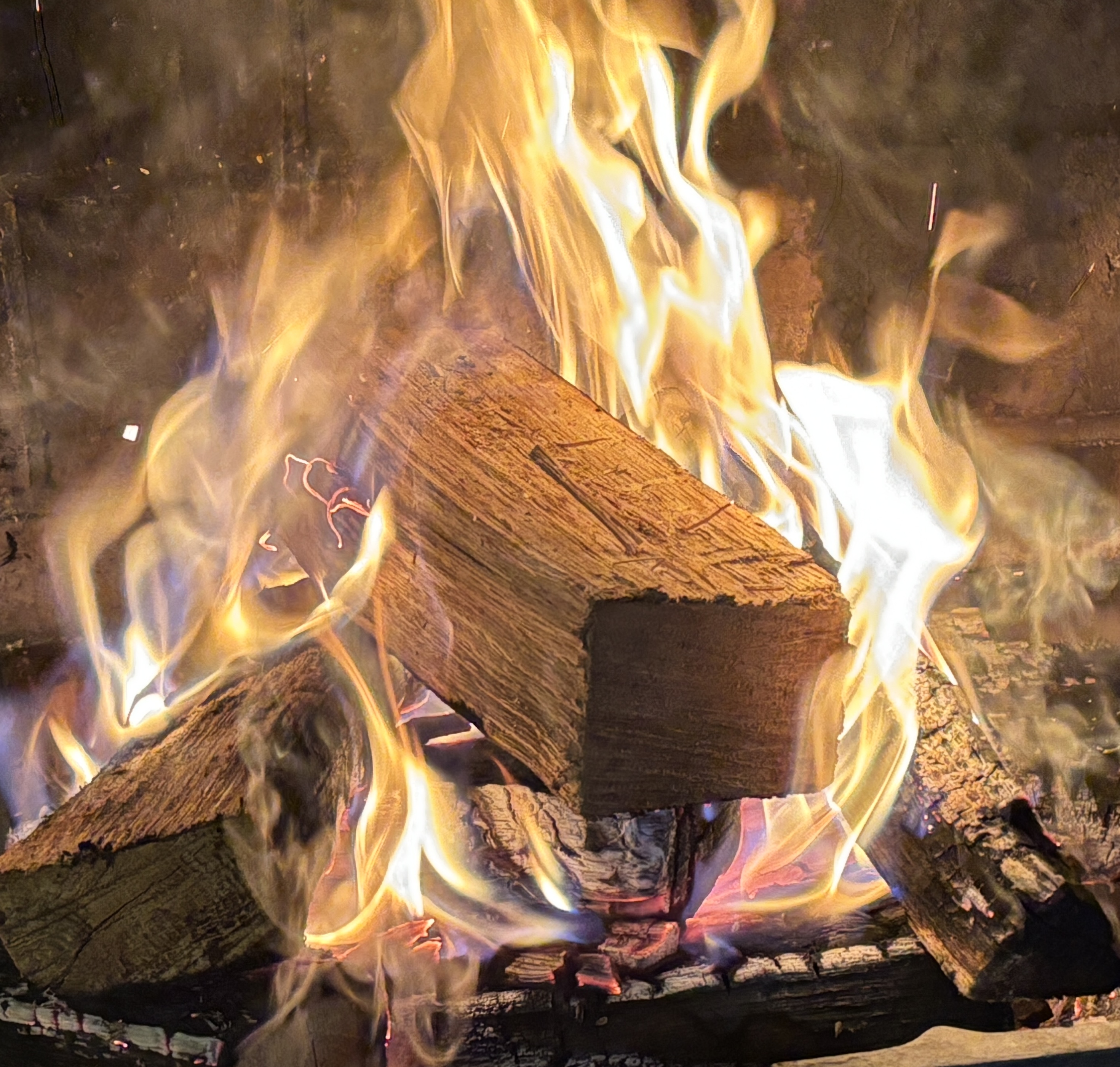
Listening to the fire wondering what exactly makes the sounds. Do flames make noise? Is it the reaction of the wood? Would it sound different if something else were burning? Trying and failing not to think about the devastation of Los Angeles. Wondering why it can be hard to get a fire you’ve built to catch while houses not intended to be burned seem to ignite so easily.
I didn’t know until yesterday what caused the sudden smoke. Every year when I build this fire it will burn respectfully for hours until without warning the room fills with smoke and the alarm blares and I have to open the windows and the door. I’ve just learned that this happened because of a particular piece of wood I’d added, which was not completely dry inside. What I still don’t know is why the dampness leads to smoke, or why one piece of wood stacked on top of another would be harboring remnants of water and not the piece below it or next to it. Is there a way to look at the wood and know what’s inside? Maybe someone who has spent more time with wood could discern it.
There is so much more I don’t know about the fire. How does the configuration of the logs determine the shape of the conflagration? What role does the oxygen play? Why are the ashes white and gray instead of the color of the wood? Why do the remains of a log look black and then collapse into dust when you poke it? How is the grate unaffected? Or does it eventually break down? This one is broken in part, but still solid enough to hold up the firewood. What makes some things burn and not others–like the grate, the screen, the fireplace tools. If a house burns down, do those pieces made of iron survive? If that is true, why don’t we make more of our existences out of iron? Or would it all eventually melt if left too long alone with the flames?
I think of a friend I used to have who always built the fires when we all went together to a cabin in the mountains. He was proud of his Boy Scout roots and seemed to relish the responsibility. I never asked him how he did it and he never stopped to explain and I thought it was some mysterious formula shared among scouts and certain dads and servants from novels about English aristocrats. There’s such an appeal to reading those books although I can never read them without imagining how awkward it would be to have a cadre of people catering to your whims and doing things for you that the rest of us do for ourselves, like getting dressed, and making dinner, and answering the front door. I think of a young woman wearing an unnecessarily frilly uniform making the rounds of every fireplace in the unnecessarily massive mansion every cold, damp morning, and laying out the kindling and the firewood just so, in case a member of the unnecessarily wealthy family decided to entertain themselves or others in that particular room on that particular day. I think about the classes of people whose money and power were passed down from one generation to the next while so many more others worked to make a living, or struggled to find work, or struggled to make a living.
And this is not unlike today, although many of the details have changed and the props and costumes and sets have changed. We still have the absurdly affluent doing whatever it takes to become more affluent and keep the serving class in poverty and with no choice but to serve or starve, or to serve and starve anyway. For centuries the divide and disgust was undisguised. Then in recent decades, discrimination became more discreet. And now, the curtains have been pulled back, but not to reveal sunshine–instead only darkness. The self-appointed wizards shout without shame that they will not tolerate anyone who is different from them–anyone who is not a straight, white, rich, egotistical man with anachronistic ideas. They will not allow anyone else to flourish, to thrive, to own their worth, to revel in their uniqueness, because if the rest of us claim our power and feel free to share our ideas, their power over us will diminish. Their ideas will be challenged. Their selfishness and greed will no longer be unhindered. They are damning the principles that many of us hold up as the ideals of humanity–the importance of including all because everyone deserves to be included and everyone’s contributions are needed, the theoretically democratic notion that all of us are created equal–possessing inherent worth and dignity–and entitled to treatment as such, and the seemingly simple but historically abused concept that our differences–the endless variations in how we look and act and think and communicate and love and live and move in the world–are extraordinary and awe-inspiring and cause for celebration, not condemnation.
The four cardinals perched in the tree outside this window have gone now. Where, I have no idea. What signals the birds to stop their feeding and flitting is unknown to me. I saw those cardinals as my ancestors, keeping watch or imparting a message I couldn’t quite understand today. But they’ve flown, leaving me to turn my focus back to the fire, gratefully absorbing its warmth while I wonder what happens now.
Share this:

Dear World,
Apparently some other voters elected this unfathomably cruel, heartless, short-sighted, ignorant individual to the White House. It’s hard for me to understand why they did this. I voted for Kamala Harris.
Nevertheless, not only my family and friends and many people I know, but millions more who I don’t know are being or will soon be directly and egregiously harmed by the likely illegal actions of the administration in its first two weeks alone. People’s lives will be irrevocably changed. People are going to suffer. People are going to die. Not just liberals or immigrants or queer people, but millions of innocent people across the United States and around the world who are (in many cases unknowingly) being targeted by the dangerous and destructive policies this administration is implementing.
What’s happening is heartbreaking and gut-wrenching. We cannot let this man or his enablers break us. We cannot let them win. It is clear they intend to throw everything they possibly can in our faces until they beat us down. We have to stand tall, and when we fall, help each other up. There’s no panacea for this insipid sickness. There ARE a lot of humans out there committed to doing good in their communities and in the world. There ARE a million little things we can to do care for each other, support people who are doing the hard work, do what we can when we can, and step back and rest when we need to, because that’s just as important.
We are sailing in rough waters through a violent storm. Hold on. Hold on to each other. Cry when you need to cry. Laugh when you can laugh. Find ways to keep creating, building, sheltering, protecting, uplifting, singing, listening, learning, teaching, nurturing, giving, imagining, caring, loving. We need all the energy we can muster. Let your righteous indignation and your holy anger fuel your work. And remember to breathe. We’re going to need stamina for this fight. And snacks. Don’t give up.
If you need me, let me know. If I need you, I will do the same. We need each other to survive. And we will. Together.
Share this:


I would get lost on a path
I would get wet under a roof
I would be jolted awake by silence
No one else can come to the rescue
It’s just me vs. the jackhammers
the narcissists the black holes the ignorant
the sirens and the mass of melting neurons
My cup has been emptied
Every drop leaking out before
I can bring it to my lips
I know I am not the only casualty
The brilliant rainbow and the fluffy white clouds are littered with bodies
I am not special
But I once was
Share this:


It’s almost my birthday and I am thinking a lot, as one does when a birthday approaches, about everything. Asking a lot of questions.
I am thinking about why every book I read seems to contain a subtle but unmistakable link to the previous book I read, like a scene set in New Haven, Connecticut, or a young character hospitalized with a serious illness, or a political protest. Why are books about witches and witch trials so popular right now? Perhaps, or probably, because most men (and some women) have always been threatened by women who are strong and independent and powerful, and they still are. I have read a lot of books about the persecution of witches and they never fail to enrage me. Maybe I just want to be a witch. I also want to have to a Scottish accent. Or listen to Scottish accents. All day.
Books consume me these days. Reading always has, but lately novels are my means to escape from our ceaselessly corrosive culture. I can hardly stomach our society and the way it treats people–people of color, women, LGBTQIA+ individuals, people with disabilities. Basically anyone who isn’t Mitch McConnell or similar. Even though books I read have bad guys and characters have bad days and there is trauma and suffering there is also so much joy and redemption and humor and empathy and fascinating and strange and delightful people with whom I can immerse myself. Of course that good stuff exists in my real life too, but it’s not as reliably accessible. Reading is my vice and my virtue. The novels I read also help me understand why people can be such schmucks. But it doesn’t make their cruelty any easier to take.
I am thinking about earwax, and where it comes from, and where those teeny tiny flies that emerge from the drainage holes in the back of our bathroom sink come from. And how you wouldn’t want those flies to encounter your earwax. Why do the flies only appear in that bathroom? Do they have a purpose in life? If so, I am quashing that purpose. Sorry, little guys. Apparently as my birthday approaches, I am inclined to tie together loose threads. Sometimes they come unraveled again.
I am pretty sure I believe that people can change, but how much I am not sure. At the age I’m about to be tomorrow, I feel like what’s left for me to master is infinite and what I don’t understand is vast. Certainly there is plenty for me still to learn. But what’s my capacity to learn it? I played soccer last night, the second game in my 12th (?) season of playing in the Arlington Women’s Soccer League. I am fairly confident I’m never going to get any better at soccer. I would say I’m probably better than most people who have never played the game. But I am not as good as most of the women who play on my team or in our league. Admittedly, I do not practice outside of our games and I have not put time or energy into improving except for the simple fact that I am showing up and doing my best. And after all these years, I still have to remind myself every single Monday that showing up is enough.
Yesterday I was the guest speaker for a class in the school of public affairs at American University. My co-worker and friend teaches the class and invited me to talk about nonprofit communications. I love talking with students about writing and communicating, whether it’s elementary school kids at career day or college students. The crux of the conversation was that communication is all about choices. When you interview someone, you choose what to ask and how to ask it. When you write about the interview, you choose what facts to focus on and what to leave out. Your choices have immense power to influence the reader and their perception of the subject. When you’re doing nonprofit communications, you choose your audiences, and how you’re going to reach them, and what you want them to do. You can’t control what they do, but your choices can push them in one direction or another, if you make good ones. I told the class that usually the choices aren’t right or wrong, but they always matter.
In recent weeks I’ve visited a lot of college campuses. In addition to the class visit at AU, we spent our spring break touring colleges so my high school sophomore daughter can start thinking about what’s possible for her after she graduates. More choices. Big ones. Complicated choices. Seeing these colleges is exciting and also startling. I cannot quite comprehend that it’s been more than 25 years since I was one of those kids, at a point in my life when so many choices lay ahead of me–lavish, abundant possibilities. Even though I am only middle-aged now, I feel like there are so many choices behind me, so many doors closed, that I am unsure about what’s left. I have chosen my husband and we chose to have two children and we chose how to raise them. We chose where to live, and what jobs to have, and even though some of the small details may change, it feels like we’re pretty locked in to our current circumstances, for better or for worse. This is primarily because of bad choices, most of which are around money. My brain does not like to keep track of money, or calculate things, or hold onto numbers of any kind. I can’t even remember my license plate number. I think I have dyscalculia, although I’ve never been diagnosed, and people have made fun of me when I’ve brought it up.
Some part of me has always hoped that my financial foibles would be graciously overlooked because of my decency and tendency toward kindness. That I would be excused from my mistakes by virtue of my virtue. I don’t think it actually works that way.
When I was talking to the AU students, all of whom were taking notes (I hope, and not doing something else entirely) on their laptops, I kept thinking how I had to take notes by hand in college. And I went to college before ordinary people even had the internet! Not that it’s a good thing or a bad thing. It’s just a thing. Making choices was a whole different ball of wax before the Internet. I don’t know that we make any better choices now, we just make choices while information floods our brains. What did my brain used to be full of? Song lyrics? Hormones? Possibilities? Questions, for sure. That hasn’t changed.
What do I want from the rest of my life? More chocolate cake? Bigger muscles? The chance to hold more babies. Last week I interviewed four young women for a project for work. When I asked one of them–Patrese–to sign a consent form acknowledging that our interview would be recorded and excerpts from it posted online, she asked me to hold her baby. I was glad to. I hoisted the little girl onto my hip and talked with her about what her mom was doing. She played with the laminated card on which interview questions were printed and listened to the noise it made when she moved it around. She dropped it. I picked it up and handed it back to her. Several times. I continued to hold the little girl, who was wearing a denim jumper over her diaper, while we set up the camera and the lights and got Patrese set up with her mic. I bounced the baby while I interviewed her mom about how the pandemic affected her life and what she’s had to do as a result. I held her baby while I asked her about safety, and family, and the kind of world she would like to see her baby grow up in. By the time we finished talking, that little girl was fast asleep on my chest. I wondered if Patrese was going to take her back or if she was simply too relieved to have someone else holding her baby for a little while. I would’ve kept holding her too. But I handed her back, trying not to wake her up. I was thinking about all the ways the pandemic changed my life, which were different, but not entirely, from Patrese’s. I don’t know if those feelings– isolation and uncertainty, and that sense of being in survival mode–will ever truly go away, even when we’re surrounded by people and things are theoretically ok. Maybe it’s the uncertainty that haunts me the most. The constant grinding in my brain of questions that have no answers. Choices that may not be right or wrong but simply are. Maybe all I can ask for in the rest of my life is patience and the ability to take a few deep breaths and let the questions float away.
Share this:


I realized today that when friend after friend from church hugged me this weekend and said, “I haven’t seen you for so long! I’ve missed you! I’m so glad to see you!” that not a single one of them was trying to make me feel guilty about not coming to church or accusing me of being a bad friend. Every single hug was accompanied by genuine joy. Every single person made me feel loved and valued just for being me and for appearing right in front of them at that moment. I wasn’t required to do or accomplish or prove anything. They were just happy to see me because I’m me. And I was equally happy to see them. Now why is that so hard to believe? I’ve been letting that sink in all day.
While are long past the “stay in your bubble” phase of the pandemic, collectively and individually we’ve had to retreat into new bubbles, emerge from them, retreat again, and sometimes the bubbles just pop. There’s no more universal wisdom. I assume there is new science but if there is legitimate and agreed-upon public health guidance based on the new science, I sure haven’t heard about it. And so everyone has their own extremely specific ideas about what they should and shouldn’t do, although they might change from day to day or situation to situation, and they remain emotionally fraught. As of January 2023, every time you leave your house you have to take into account your tolerance for risk, the tolerance for risk of anyone you might be interacting with, and the house rules for anywhere you’re going to go. We’ve never been so aware of the fact that our behaviors can seriously affect others, even though we may still be unsure of exactly how.
Ever since I was a teenager, being part of a faith community has mattered to me. And because of my personality, my DNA, my enneagram type (two), or whatever other measure you might use, when I am in any community, I mean to make a difference. When I do not have a specific role to fulfill, I can feel lost and useless. I am not saying this is a good thing or a bad thing. It is simply how I have felt for most of my life. I have spent some amount of energy in recent years reminding myself that I am important not just for what I can do, but for just being me. You would think it would take the pressure off.

Being in a faith community can also be hard as hell. Yesterday I participated in a workshop at church for people who want to be–or already are–leaders in the church, about how leadership in a congregation should not simply be out of duty, but should be about. sharing our gifts with others to make the community better, and should include elements of holiness, joy, and fun. As Rev. Amanda jokingly reminded us, however, the challenge of church is that it’s made up of people. And people are human. And humans make mistakes. And sometimes church (or any other faith community) breaks your heart. She asked how many people had experienced that particular kind of heartbreak when the community you revere disappoints you. Most people raised their hands. I realized that every single congregation I’ve been a part of has broken my heart. I take that back–the church I attended in college did not at any point crush my spirit, but I’m not sure I was involved enough for that to count. I was part of the college ministry of the church for a few years and I don’t recall anything bad happening there. But four other congregations rocked by some kind of scandal or rift or bad behavior is plenty. Rev. Amanda said making the effort to repair and heal from the brokenness matters, and makes the community stronger. But it also requires a lot of courage and commitment to put yourself back into the fray.
In my current congregation, the Unitarian Universalist Church of Arlington, I was asked to be a leader soon after I arrived. I had come to the church warily, certain that I could not find a community where I both agreed with the theology and would be treated like I mattered. Immediately, I felt a sense of belonging. I served as a worship associate, helping craft and lead services. When the minister had to leave (i.e. heartbreaking experience #4), I was asked to help orient the temporary minister to her role until an interim minister was found. I helped the interim minister as a worship associate. Then I was asked to serve on the ministerial search committee to find a permanent minister. This was a two-year obligation that was beyond time-consuming and also incredibly rewarding. And just as we were concluding the search, the pandemic hit. Our new minister (the aforementioned Rev. Amanda) was called to a congregation that largely existed at that point as hundreds of little boxes in a zoom meeting. And then, my job was done. I tried to do zoom church for a while, but it made me too sad, for so many reasons. I did some church classes and workshops and meetings through zoom. Some of them were good. Some were frustrating because I had to do them from my bedroom, propped up in my bed, in an effort to find any semblance of privacy. There is no privacy in my house. I just got tired of it all. I’m an extrovert. Zoom is exhausting. There are no hugs.
At some point church reopened. Then it closed again. And reopened. I hate wearing a mask. I do it, of course, when called upon. But it still makes my face sweat and my glasses fog up unless I go through various machinations to adjust and readjust it. And I realized during the pandemic that I have a hard time understanding people speaking when I can’t see their mouths. I also realized I have a hard time recognizing people who are wearing masks, especially when I haven’t seen them for a couple years. So when I went back to in-person church for the first time in a while sometime last year, I felt so lost and confused. After the service I just sat in the back and cried. I felt like I had completely forgotten who I was or how to be with other people. It was awful.

I had dipped my toe in the church waters in the fall when I volunteered to co-facilitate a covenant group for parents of gender-expansive kids. I’ve remembered how satisfying it is to choose readings and music that make people think and feel. (See quotes sprinkled throughout this post.) Yesterday at the leadership workshop I remembered how, even though I cannot sit still for very long, I love being in a room with other humans who are trying to nurture themselves and use their spiritual gifts to do something good for their community. Tikkun olam! These are my people.
Today I went back to church for the service. I sat near the front where I love to sit. I wore my mask and had to adjust it and got a little sweaty but survived. More importantly, I listened to the wisdom lesson which was one of my all-time favorite children’s stories and beautifully illustrates what Unitarian Universalism is. I geeked out on the sermon about why the history and principles of the UU tradition matter and how we are still evolving and transforming, as individuals and as a faith. I sang hymns, some of which I like and some of which are just ok. And I hugged people. And they welcomed me. It’s been a while, but no one judged. My heart was full and I was home again. AMEN.

Share this:


If my teenager devotes as much time and attention to preparing for and applying to college as she has plotting and organizing her efforts to buy tickets to see Taylor Swift, she will get in anywhere she wants with scholarship offers to boot. In fact she has said that she and her friends (both real life and online Swifties) are comparing receiving the magic presale code by text (required to buy tickets before the general public, if any are even left at that point) to hearing whether you’ve been accepted to your first choice school. Her excitement and anxiety around this concert tour have been enormous. She has said many times, “I am so scared.” As in, that we won’t get tickets, or maybe won’t get tickets for the right show, or won’t get good seats. The emotional intensity is palpable. I get it. This is someone whose music and persona she cares a lot about. I’ve certainly felt that way about musicians throughout my life. I know that problems, like gas or water, can expand to fill up all available room, regardless of their overall seriousness or significance. Hopefully we will be able to get the tickets tomorrow morning and all will be well. And between now and two years from now when she is actually applying for college, we will take lots and lots of deep breaths.
Meanwhile, we are also facing the superficially less dramatic but actually much more daunting prospect of her learning to drive. She and I attended a mandatory two-hour presentation about driver safety and education last week. Her school auditorium was filled with other sophomores and their parents and I wondered what was going through all of their heads. Here’s what I learned that night:
You’re no longer supposed to position your hands at 10 and 2 on the steering wheel. Now 8 and 4 are recommended, so you don’t have to cross your arms when you turn and if the airbag goes off you’re less likely to sustain injuries from your arms being crossed, and to reduce fatigue from driving. I thought this was an interesting tip, and wondered why no one is making an effort to tell adults who have already been driving for years to change their habits. There’s also a new way you’re supposed to position your side mirrors to eliminate the blind spot and avoid accidents. I know if you have a newer car you have the fancy indicators that tell you when someone is close by in the lanes next to you, but I drive a 2010 minivan so I have no such luxury. There were actually a few driving tips that seemed useful and I wondered why adults are required to do so little to renew their licenses. Not that I want extra administrative hurdles in my life, but I am sure my driving has gotten worse and I could use a little refresher course. I guess that’s what I was getting last week.
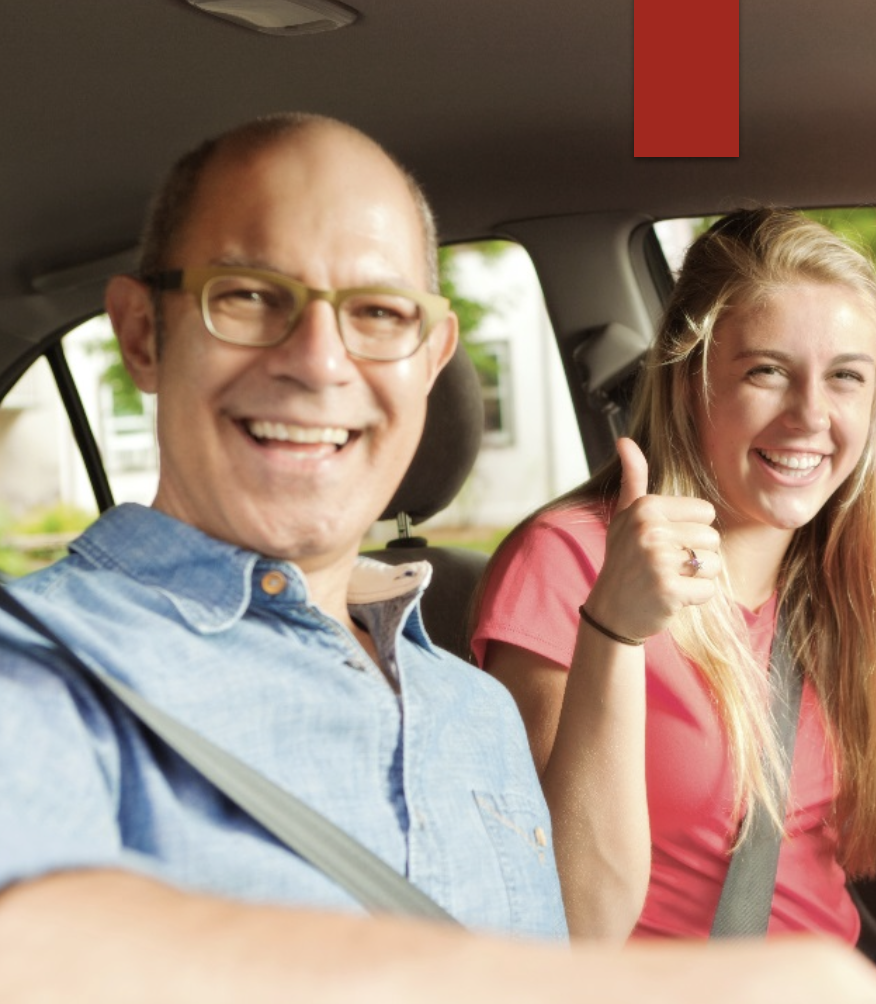
Allegedly, parents have the most influence on teens’ driving habits. The presentation was heavy on telling us to get ourselves together to both model proper behavior when we’re driving and set the rules and to feel free to take away driving privileges. We are supposed to go through step-by-step driving lessons in the booklet they gave us, and log 45 hours of driving practice with our kids while they have their learners permit. And review and sign and make them sign various contracts in the back of the booklet outlining what they are and are not allowed to do and what happens if they mess up. That is all in addition to the classroom portion of driver’s ed they take during gym class, and the behind-the-wheel training they have to take with licensed instructors. No pressure. The driver’s ed teachers who were presenting emphasized the importance of establishing a bond with your children to effectively encourage safe driving habits. If you haven’t already established a bond by the time they’re 15 and 6 months, it may be a challenge to start now. The slide show also included a smiling dad and daughter sitting in the front seat of a car and advised us to leave our family problems at home when we practice driving, to make it a fun experience for everyone.
I wondered how kids who don’t have reliable parents, or parents who drive, or parents who own a car, are supposed to manage all this. Today as part of my job I was downtown meeting with DC Council Members and their staffs to discuss issues related to youth homelessness. Included in our group were three young adults who have experienced homelessness and are now advocating on behalf of themselves and their peers for tailored workforce development programs and mobile mental health services that meet their needs. One of the service providers mentioned that abundant driver jobs are available in the DC area, working for Amazon or FedEx or UPS, among others. And many young people she works with are eager to apply for the jobs, but they don’t have driver’s licenses because they grew up taking public transportation, and they don’t have parents available to teach them to drive, or cars to learn on. One of the young people said that the logistical barriers are so significant that many teens don’t bother with them, and drive anyway, often taking cars that don’t belong to them because they literally have no legitimate way of getting a license and buying and insuring their own cars.
Which brings me back to the driver’s ed presentation and the talk by the police officer. He was there, ostensibly, to talk about how to behave when you’re pulled over while driving. He did that, but only after he offered a lot of his own perspective on teens and driving and how judges where we live don’t like to see teens in court for traffic violations because the judges know the teens should know better and are very strict. All of it felt like a lecture designed to scare the kids, which it probably was. But it irritated me. Perhaps because this is not my preferred parenting technique and I am not a police officer and I know a lot of the people in the audience probably bristled the moment the officer walked up to the front of the auditorium. I should mention that the officer was Black, and at least half if not three-quarters of the young people in the audience were people of color. So the officer said that if you’re pulled over, you should roll down the windows and put your hands on the steering wheel where they’re visible. He said that if the officer asks for your license you should say, “it’s in my pocket, can I reach behind me and get it out of my wallet,” or “it’s in my bag on the passenger seat, may I reach over and get it,” or whatever the case may be, so you have permission to move. “So we don’t have any accidents,” the officer said. Which translates to, “so we don’t shoot you and kill you for no reason,” I guess. He said, “Be polite. When you’re pulled over it’s not the time to practice your trial lawyer skills. If you feel like the officer did something wrong, your parents can deal with that later. It’s your job to be polite.” Are your parents really going to sort it out later? Whose parents are going to do that? Maybe parents who actually are trial lawyers? The more he talked, the more I did not want to listen.
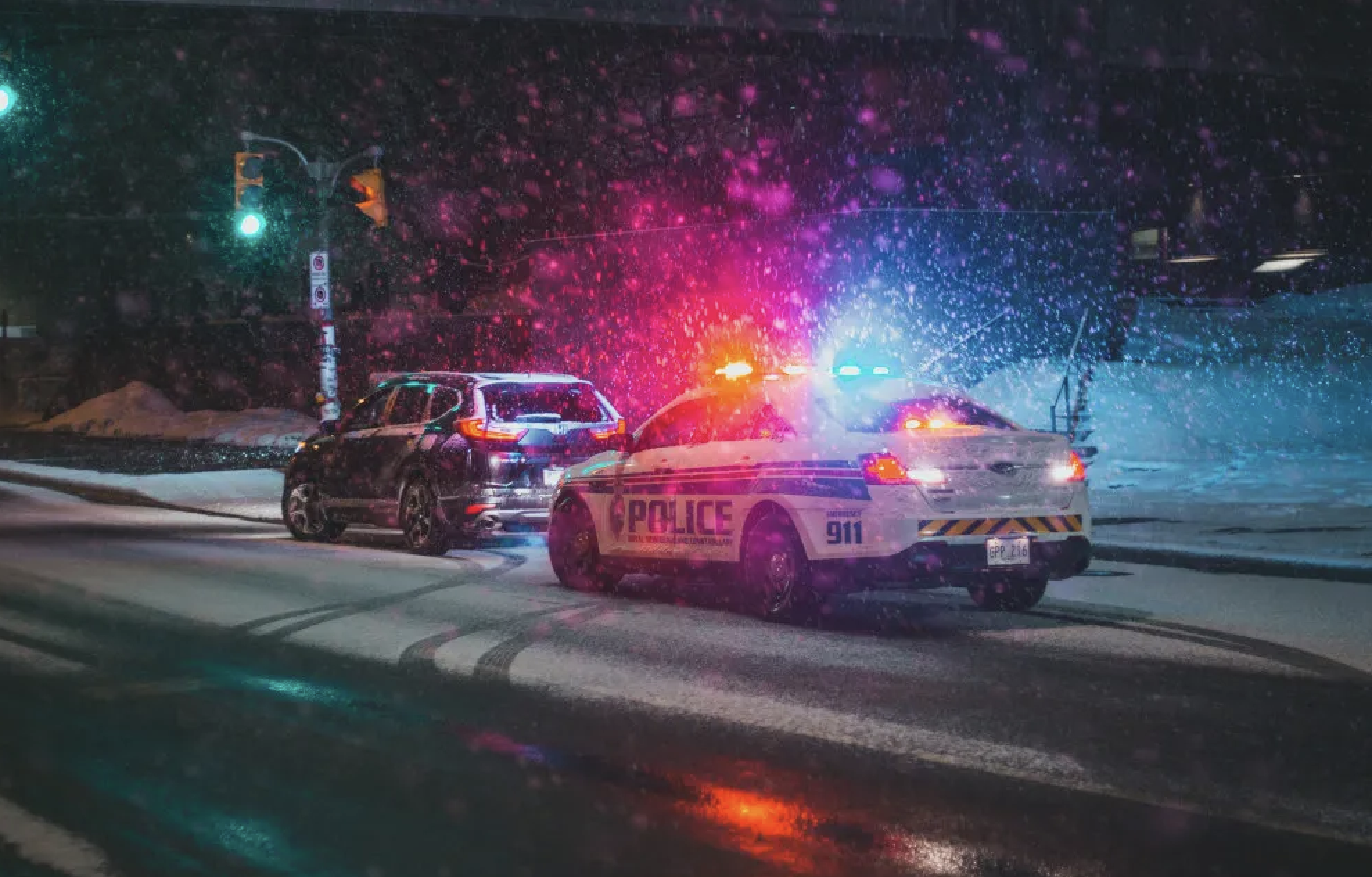
I am a middle-aged white woman who has been pulled over a handful of times for stupid things. Mostly I have avoided getting tickets, perhaps because I legitimately didn’t know my tail light was out, or I wasn’t actually drunk but just trying to get the hair out of my eyes with a barrette (that did actually happen). Maybe I just seem idiotic and pathetic when they pull me over because I get flustered easily. And I seriously didn’t know that it’s illegal to drive through a parking lot in order to get onto a different road if the traffic is bad. Did you know that? (I did get the ticket for that one, and as a result I was even later to pick my kid up from day care). I am acutely aware that I have never been racially profiled and no officer has ever pulled out his gun when I reached for my license or registration. My daughter will likely be treated the same way because she is white. Unfortunately some of her friends and some of the teenagers in that auditorium will not be. We have to do a lot more to change the way police officers behave or even at a more basic level how we approach and achieve community safety with or without police, so no one else who is unarmed, nonthreatening, and completely innocent, gets killed by a cop for any reason.
Our lives are not perfect or without challenges, but I understand how privileged we are. Listening to the stories of these young people today talk about times in their lives when they were trying to find a place to stay from day to day, without any support from family, was important. One of them, who is currently studying for the LSAT and trying to figure out her path to law school, was homeless for her final two years of college. Another talked about the value of his lived experience as a prospective employee. He wants to be a social worker and he can draw on his knowledge of earning his GED while incarcerated, having been part of the foster care system, and being a parent, to help others. He’s already doing that by serving on several advisory boards and speaking at meetings and events across the city.
I try to provide all kinds of fun and enriching experiences for my kids. I want them to be exposed to all kinds of things. But hopefully they will never have to know what it’s like to be homeless or involved in the justice system or profiled by the police. Hopefully I will be able to model good behavior when I’m driving so none of us will crash because we’re distracted or sleepy. Hopefully my daughter will get a job so she can afford the concert tickets and the merch and the meals out with friends and excursions to Starbucks. And we will all keep in mind that even when we struggle, we do it with privilege.
Share this:


This morning I took the mouse that had been squeaking all night (because it was stuck in a glue trap designed to catch roaches and other insects) and carried it into the backyard and pried its little paws and matted fur off of the glue and left it in the grass. I have no idea if it will survive, but I didn’t know what else to do. I couldn’t kill it, although we’ve had mousetraps all over our house for months because of a persistent colony. When the mousetraps kill them, I bag the bodies and the traps and put them outside for the trash. The line between active and passive destruction is thin.
The mouse did not ask to be made into a metaphor. And yet.
There is nothing particularly wrong with me, any more than anyone else. I am more sensitive than most. I have a sleep disorder and other minor afflictions. But this world. The conflict. The cruelty. The confusion. The things that smell bad. It’s like layer upon layer of glue traps of injustice and illness and insecurity. No amount of alliteration can save us. Nothing we can do eliminates the suffering.
Today is Easter. Resurrection–to me–is another metaphor. An opportunity to remind ourselves of all the possibilities of life that emerge from the darkest of days.

This week we spent a few days at the beach. For most of our trip, it was cold and windy. Sitting on the sand and watching the waves was lovely but a bit chilly. The boardwalk was deserted at first. We spent time inside, reading and writing and drawing, and then it warmed up. Everyone else noticed too, and there were suddenly plenty of people on the beach, even though it was still too cool to swim. Who knows what all those other people were doing inside while it was cold, but when the sun came out, they did too. Possibilities opening up like the tulips that lined the sidewalks.
Traveling magnifies the intensity of parenting by 1,000. There are even more decisions than usual to make. Calculations become more complex when you factor in everyone’s desires, preferences, and needs–whether they are stated explicitly or you happen to know them or you’re somehow supposed to guess correctly what they are. Traveling reminds me that I cannot make everyone happy, and that no matter how much I might want to, it’s ultimately not my job and not within my power. I do a lot for my kids, but I can’t (and shouldn’t) do everything. The Easter Bunny did not come to our house today. I warned the kids yesterday that the Bunny was just not available this year, and that there were plenty of other celebrations happening, as both of their birthdays and mine are this month. They both said repeatedly that it was fine and they didn’t mind. Easter is much more of a cultural event to them than a religious one. They are both savvy about the nature of middle-of-the-night visiting creatures (our resident mice never bring us any treats). We just splurged on treats during our beach trip, and we still have plenty of candy left over from their Christmas stockings. Niki said, “I get it. The Easter Bunny is stuck in traffic, has bills to pay, calls to make.” They understand. They are not deprived. I had a couple flashes of guilt, but they were fleeting.
This afternoon I stepped outside to see if the sticky mouse was still in the grass where I had left them. I did not see any sign of them. I hoped that they managed to find refuge somewhere (other than back in our house, maybe?) and some way of removing the residue from their paws. I wonder if the mice still in here are missing that little dude. I can’t think too much more about this or I will become very sad. Absolutely there are much larger and more pressing problems in the world, but it comes back once again to my compulsion to bear witness to suffering, and examination of my role in alleviating it. The mouse remains a metaphor.
Share this:

I just ordered $100 worth of dairy-free meal replacement smoothies for my teenager, to pick up at Whole Foods tomorrow, because eating anything solid causes her severe stomach pain and she’s nauseated all the time. She came home early from school yesterday, with a COVID test in hand and instructions on how to take it with a certified COVID test instructor watching her on video. She has taken dozens of COVID tests already, and she knows how to do it, but I understand they want to make sure people are doing it right. Certified COVID test instructor Mhaxine (who must recite her script a hundred times a day) had us focus my phone’s camera on various codes on the box and on my ID and on the test results. Zoe doesn’t have COVID, which I already knew. But now you can’t be home sick from school or go to the clinic without testing. You can’t go back to school without emailing the negative test results to the school nurse and attendance office. Meanwhile, we are going back and forth with the pediatrician and the pediatric gastroenterologist and Zoe is scheduled to have an endoscopy in two weeks. She’s missed two days of crew–which you’re not supposed to miss any days of between February 21 and the end of May. Tomorrow I’m going to deliver an açaí bowl to her at lunchtime because it’s one of the only things she’s been able to eat over the past few days without feeling sick. When your kid is miserable, all your priorities shift.
At least she has beautiful nails. I took her with me to the nail salon last weekend and she somehow managed to get acrylic nails without me noticing until I had to pay the bill. Even if she can’t eat, she can at least admire her nails and enjoy the sound of tapping them on her phone.
I have a list on my desk of all the appointments I need to schedule: mammogram (oh I guess I need to see the gynecologist first, to get a referral), colonoscopy, dentist, kids’ dentist, my dermatologist, etc. All things I’ve been putting off or rescheduling since COVID. Hopefully I won’t have lumps or polyps or cavities or dangerous moles. I keep thinking I could just spend a day making appointments, but that would not be a very pleasant day. Since COVID seems to be never going away, I just need to suck it up.
Also tomorrow I am taking Niki to a camp that they don’t especially want to go to, even though it seems amazing, because they would rather stay home and play video games all day, which they think is awesome but I do not. Tomorrow is a parent-teacher conference day, so they don’t have school, but I still have to work. Someday we will have a house where I can have an office that is not in the same room as the tv and the xbox, but that day has not yet come. So off to camp they go. Last week I finally finished signing them up for summer camps and classes. This year they have fencing and archery, a camp where they drive to different parks and explore them and look for little creatures and give them names (at least that’s what they did at that camp last year), book illustration, art, and Minecraft camp (I consented to one week of this since the rest of the camps are active or artsy). Three of the weeks (book illustration and art) are just half day classes rather than full day camps because I don’t have to work those weeks and so Niki will not complain about having to go outside when it’s hot or eat lunch in a room that’s smelly. I would say my kids are spoiled, but truthfully I don’t like eating lunch outside on the ground when it’s hot or in a room that’s smelly, so I can’t blame them.
Oh, how could I forget Niki is also going to sleep away camp for the first time this summer. We all think they will love it. They’ve been to family camp at Camp Friendship twice already. They know the people, they know the place. They have not, however, slept away from us in quite a while. They can go to sleep if someone is at our house, but not if they’re at someone else’s house. And they still love to fall asleep intertwined with a parent. We are having faith that it will all work out when they are at camp. Zoe will be there too, but of course not in the cabin with them. We still have six months to prepare. Zoe was homesick at night for the first few years she went to camp, even though she loved it there. She says she eventually would fall asleep just because she was exhausted. I am constantly reminding myself that my kids are capable of things we haven’t seen them do yet, and they will be ok. Hopefully we’ll be ok too. Whenever Zoe is at camp I check the website compulsively for photos of her having fun, and race to the mailbox to look for letters. I remind myself that, during a rocky first grade year, Niki dreaded school–and then it ended because of COVID. Then we homeschooled for a year. And they did not especially want to go back to school for third grade because it was so much fun being home with me all day! And they never had to get dressed! And they played video games after they finished their work! It took a while for them to get used to school again (as it did for most kids I think, whether or not they were homeschooled or virtual schooled or hybrid schooled last year) and now they actually like school. They come home and talk about what they learned, and look forward to seeing their friends, and miss school when they have to stay home. I honestly wasn’t sure that would ever happen again, since it basically hadn’t happened since kindergarten. I had started to think kindergarten was some magical year that we would never experience again and school would be a battle forever. But it’s ok now.
And there is a nation of innocent people being attacked for no reason by an evil lunatic dictator. There are a lot of blue and yellow flags and lights and tributes. But I sure don’t know what to do, except wonder why our world is such a mess. The president stood up for LGBTQIA+ kids and mental health care in his State of the Union speech, but did not mention canceling student debt, or racial equity, or DC statehood. I did enjoy seeing two women–Kamala Harris and Nanci Pelosi–sitting behind him though, instead of two white guys. And maybe if the other old white guys don’t get in the way, Ketanji Brown Jackson will be confirmed to the Supreme Court and we’ll be just a little closer to having more justices who look like the people in our country and again, not all old white guys. No offense to the old white guys I love. They are not the ones I’m talking about.
In preparation for a meeting at work today I watched this video by Georgetown Law professor Kristin Henning, author of The Rage of Innocence: How America Criminalizes Black Youth. I have the book on my desk to start reading next week. As part of my new job with DC Action, I’m working with folks to reframe the conversation on youth and crime. Professor Henning describes in the video how Black young people are targeted and often arrested or harmed because they’re seen doing normal adolescent activities. DC Action and our partners are working to help District leaders, journalists, and others understand that there’s more to the story of a 14-year-old charged with carjacking than the need to lock him up for a long time or hold him accountable. Does it not occur to anyone that when 12-, 13-, and 14-year-olds are committing crimes like these, we need to look deeper? As I’ve written in op-eds and blog posts, the people who need to be accountable are the adults who are failing to provide meaningful out-of-school-time activities, mentoring, emotional support, job opportunities, and mental health care to young people–especially young Black people–who have suffered disproportionately through the pandemic. I see the struggles in my own kids, who have as much support and resources as they could possibly need. So when I read every day about people trying to ban books by and about Black and brown people and LGBTQIA+ people (don’t get me started on Texas Gov. Abbott who would rather have queer kids committing suicide than offer their families support) and school systems prohibiting teachers and students from discussing race or racism, or people saying antiracism is actually racism, I get enraged. No wonder I can’t sleep.
This, I think, is why people are obsessed with Wordle right now. It’s not always easy, but it’s definitely solvable. You can point to it (which is why so many people post their scores, although I do not) and say, “Hey, I did a thing! I accomplished something despite my existential angst and general feeling of despondence about our country and our world and all the personal and global problems with which I am grappling.” Or maybe that’s just why I play Wordle.
I haven’t been back to church in weeks, even though they’ve resumed in-person services. Going to church has always brought joy to me and been so important in my life, but the thought of going back again where everyone is masked and I don’t recognize even my friends and hugging is no longer a thing just makes me anxious and sad. I know wishing everything were back to “normal” is futile and there’s no such thing as normal anymore. But I haven’t yet arrived at a state of grace where I can embrace the constant change and dizzying feeling of flux. Maybe some days. But not today.

 You Ask a Lot of Questions