You are currently browsing the tag archive for the ‘Heartstopper’ tag.
It’s been a rough week to be the parent of a trans kid and an advocate for the queer community. I told a friend that it feels like you’ve just recovered from a gut punch, caught your breath, and stood back up, when another punch comes straight at you. Of course, this is what it feels like to be just about anyone in the US since January, unless you’re a rich and powerful white cis straight man. If your demographic or your job or your ethnic group or religion hasn’t already been attacked, just wait a few minutes.
I’m trying not to feel like I’m being dragged under the waves, but it’s hard. Thank goodness there are always books! Helping people feel connected with other humans since the invention of the printing press!

To celebrate Pride month, I’m writing about 30 of my favorite LGBTQIA+ authors and books that center queer characters. I’ve been posting on LinkedIn and Facebook, and I shared the first 10 titles here. Now here’s the second installment of 10 more books.
No. 11) Sir Callie and the Knights of Helston by Esme Syses-Smith
I was not expecting to feel so seen by this book. While 12-year-old nonbinary Callie is the main character here, the author does an outstanding job conveying the struggles of Callie’s dad to protect and advocate for his kid (and other queer or outsider kids he encounters) in an exceedingly traditional (read: hostile) environment. Yes, this is a middle grade book, but in many ways I felt like it was written for me.
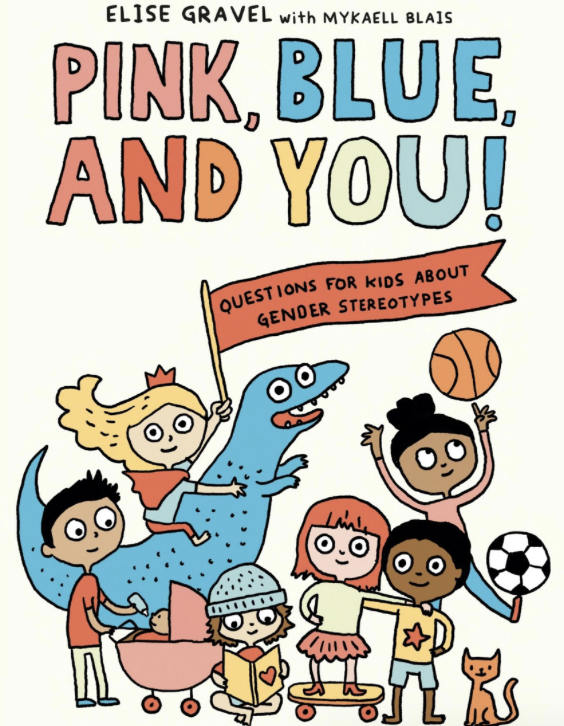
No. 12) Pink, Blue, and You! Questions for Kids about Gender Stereotypes by Elise Gravel – français
https://elisegravel.com/en/
Elise Gravel is one of our favorite authors. She is imaginative, compassionate, and funny, and she explores all kinds of topics in her books. Pink, Blue, and You! examines some of the myths our culture perpetuates about gender and invites readers to decide for themselves what they think about what kind of activities and attributes are appropriate for different kinds of humans.
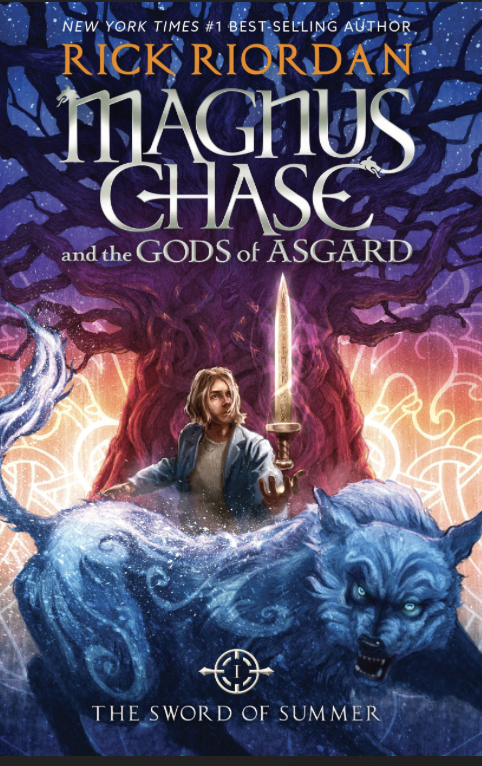
No. 13) The Magnus Chase trilogy by Rick Riordan
https://rickriordan.com/…/magnus-chase-and-the-gods-of…/
God bless Rick Riordan. He’s most famous for the Percy Jackson universe, but he’s written a lot of other books as well. Riordan does a terrific job featuring characters who are diverse in race, ethnicity, socioeconomic status, religion, gender, and other ways without tokenizing these differences. He’s also helped publish a variety of authors whose fantasy series are rooted in lore from around the world.
But right now I’m talking about the Magnus Chase and the Gods of Asgard trilogy, set in the world of Norse mythology. This series includes genderfluid and pansexual characters, and reading the books with my then-eight-year-old helped them find the words to come out as nonbinary.

No. 14) Augusten Burroughs
https://www.augusten.com/about.html
I am in the middle of listening to Augusten Burroughs’ Lust and Wonder, which apparently came out in 2016 but just came to my attention recently. If you haven’t heard of him, I recommend starting with Running with Scissors. Most of his books are memoirs, but his life has been so unusual you might think they’re fiction. I love his honesty and insights and he’s funny as hell.

No. 15) The Heartstopper series
https://aliceoseman.com/heartstopper
Heartstopper started as a web comic that quickly amassed a huge following, the became a series of graphic novels, and then was picked up by Netflix for several wonderful seasons, which are expected to culminate in a feature film this year. The stories are about these teenagers who are so normal and so unique in the way all teenagers are. They have challenges with their parents, or bullies, or self-image, or anxiety, AND they have each other AND they are all figuring out their sexuality and gender identities. The books and the show are incredibly sweet and true and heartbreaking and joyful. I would recommend these to folks who don’t necessarily have LGBTQIA+ kids (that you know of), but would like to (or should) learn more about what it’s like to be a queer kid.
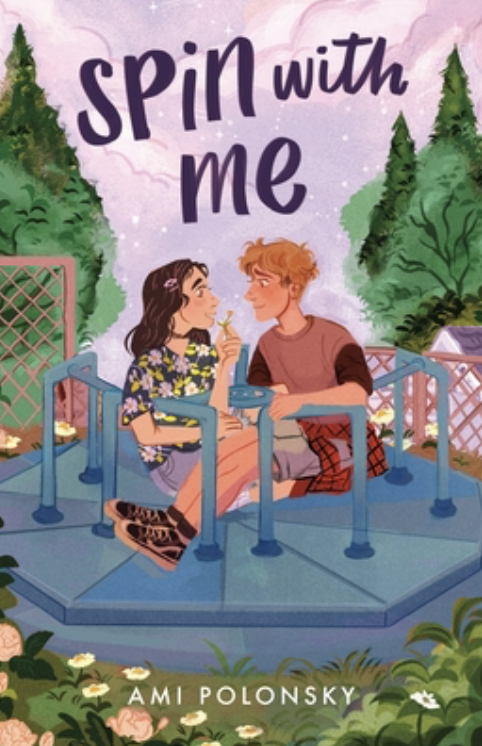
No. 16) Spin with Me by Ami Polonski
A question that isn’t always explored in books about queer identity is what it means when a person who thought they were straight develops romantic feelings for someone who is gender expansive. That’s a central theme in Spin with Me, a beautifully written story featuring a girl who temporarily moves to a new town with her dad and makes a new set of friends. Fun fact, after we finished this book, Niki wrote a message to the author through the author’s website and got a response right away!
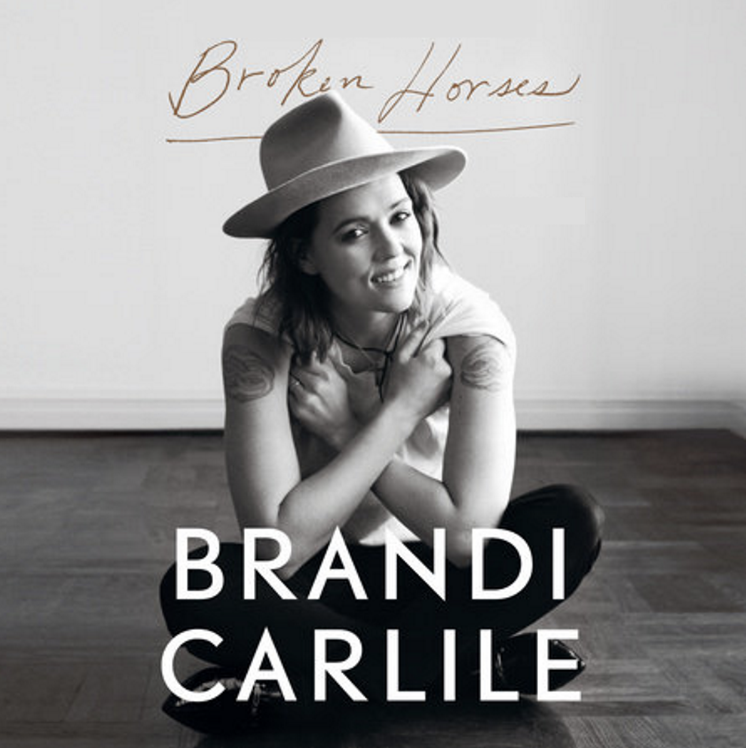
No. 17) Brandi Carlile‘s Broken Horses
https://brokenhorsesbook.com/index.html
Brandi Carlile is one of my favorite artists and someone I think is just a beautiful, brilliant, badass human. She is one of the few musicians who my husband and teenagers and I all equally love. We’ve seen her in concert several times. So if you don’t know her music, listen to it now. Then read her memoir. Better yet, listen to her memoir because she sings throughout it, songs you won’t hear on any album, but that influenced her or meant something important to her at some point in her life. She’s not only a songwriter, but she’s an insightful and talented memoirist as well.

No. 18) Dear Mothman by Robin Gow
My kid recommended this to me a while ago and I just remembered to read it. Dear Mothman pierced my heart in the best possible way. It’s about being a trans kid who feels very alone, then finally seen, and suddenly alone again and the lengths they go to to find acceptance and love. And it’s a novel written in verse, which is always cool. And Robin Gow is a trans author who I’ve just discovered has written several other books which I plan to read immediately.
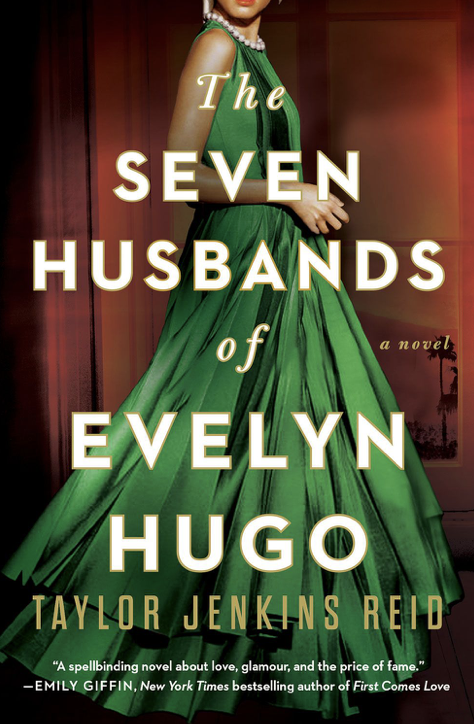
No. 19) Seven Husbands of Evelyn Hugo by Taylor Jenkins Reid
https://taylorjenkinsreid.com/books/the-seven-husbands-of-evelyn-hugo/
While LGBQTIA+ people today certainly don’t have it easy, given the political climate fomenting homophobia and transphobia, coming out as a queer person in 2025 is definitely not as seemingly impossible and dangerous as it once was. This book explores the lengths to which gay people in show business went to keep their private lives secret, and the effect that had on the people they loved.

20) Over the Top by Jonathan Van Ness
https://jonathanvanness.com/books/
I am such a Queer Eye fan that I have the lego set on my desk–a little lego version of JVN is styling the hair of the lego version of their former high school music teacher. I love Jonathan because he always makes people feel good about themselves no matter what, because he’s spent a lifetime learning to feel good about their own identity in the face of negative messages from all fronts. Over the Top is JVN’s first memoir, but he’s also written other books–fiction and nonfiction–for kids and adults about loving yourself just as you are.
Share this:

If we want to support each other’s inner lives, we must remember a simple truth: the human soul does not want to be fixed, it wants simply to be seen and heard. If we want to see and hear a person’s soul, there is another truth we must remember: the swoul is like a wild animal — tough, resilient, and yet shy. When we go crashing through the woods shouting for it to come out so we can help it, the soul will stay in hiding. But if we are willing to sit quietly and wait for a while, the soul may show itself.
~Parker Palmer
This is a talk I shared during a Sunday service at the Unitarian Universalist Church of Arlington as part of the church’s series on the six sources of Unitarian Universalism. My writing was inspired by this source: direct experience of that transcending mystery and wonder, affirmed in all cultures, which moves us to a renewal of the spirit and an openness to the forces which create and uphold life.
For two years I spent a good chunk of my waking hours talking and writing about this church. As a member of the ministerial search committee, I met with my fellow committee members weekly, and we worked doggedly to discern what the congregation needed in a new minister. Surprise–Unitarian Universalists have a lot of opinions! Our committee had to digest, synthesize, and transform what we learned into UUCA’s church profile, an incredibly elaborate version of a job announcement. Then we spent months reviewing applications and sermons of prospective ministers. This role and its attendant responsibilities were heady–and hard–and ultimately richly rewarding. It was a privilege to serve UUCA in this capacity, and if I’m being honest, it made me feel kind of important. It’s easy for me to make the mistake that what I do for a community is more valuable than who I am.
Now, raise your hand if you were part of UUCA in any way in the spring of 2020. You may recall that, just as our committee was preparing to recommend Rev. Amanda as the candidate for our senior minister, the pandemic shut everything down. All of our plans to introduce her to the congregation, celebrate a new beginning, and enjoy the fruits of our committee’s labor were funneled online or simply forgotten in the crush of a worldwide crisis.
I know every one of you here in the sanctuary or watching online has a story like this–or a very different one. There are likely a million variations on the theme of how things changed in 2020. Now, four years later, I am still feeling the effects of those changes, for better or worse. Maybe you are too. Who knows how long the ripples will expand throughout our lives?
Church has always meant community for me. Throughout my life, community often outweighed theology in my choice of a congregation. I feel lucky to have found in UUCA a place where I feel both a sense of belonging and alignment with the tenets of the faith. From the moment I arrived at UUCA, I felt seen. I felt valued. I understood that my being here mattered.
Unfortunately, for a good portion of the years since 2020, I lost that sense of belonging, not just here, but really anywhere. Does that sound at all familiar to you? The isolation of the pandemic was soul crushing. And I am a big believer in silver linings. I love my family so much, and I am so thankful for the hours we spent playing board games, watching movies, making art, and going on hikes. But the four of us did not a whole community make. I need different kinds of people and multiple communities to nurture various aspects of my personality and my identity. All of us do.
There’s a wonderful graphic novel series called Heartstopper, which is now an amazing Netflix show, that my kids adore and introduced me to and which I love now as well. First of all, Heartstopper creator Alice Oseman does a masterful job portraying the pain and beauty of making your way as a teenager, particularly as you come into your gender identity and sexual orientation. Secondly, in book four of the series, Charlie–one of the main characters–comes face to face with what feels like an insurmountable struggle. His boyfriend, Nick, wants so badly, as all of us do when we love someone, to be able to fix Charlie’s problem, but of course he can’t. And Nick realizes that, no matter how much he loves Charlie, he can’t and shouldn’t be everything to Charlie. Charlie needs a community to help him. As do we all.
I took baby steps to return to UUCA. I co-facilitated a covenant group for parents of gender-expansive kids. That was an easy one–a way to test the waters by creating a small community. Coming back to church on Sunday mornings, however, was a challenge. The first few times I tried, I felt confused and out of sorts. When we were all masked, I felt embarrassed because I didn’t recognize people who I had known for years. That kept me home for a while longer. When I came back again, I felt like I had somehow forgotten how to interact with other humans. Once after the service ended, I just sat in the back and cried. Holly saw me and sat with me. She didn’t ask me to explain myself. She just kept me company.
When I heard about the LEAD program that Greg and LeeAnn were running, I knew I had found a path back to community. I wasn’t sure what my role was supposed to be in the congregation, but this was an opportunity to meet new people and reconnect with old friends, so I took it.
The irony–or perhaps the true intention–of joining LEAD was being reminded that I didn’t need to have a leadership position or a particular responsibility in the congregation to belong. When I arrived for that first workshop, I was so warmly welcomed back. Wendy and Kristen, among other folks, let me know that they were genuinely delighted to see me again, without asking why I hadn’t come back sooner, or what I was going to be doing for the church now that I was back, or without any other expectations of me whatsoever. After the session, I gave Kristen a ride home and we sat in my car, parked outside her house, for an hour catching up. It was such a relief to renew that connection. I know I’m name dropping a lot this morning. I intentionally want to recognize the people who have shown me so much grace and love in building and rebuilding community here.
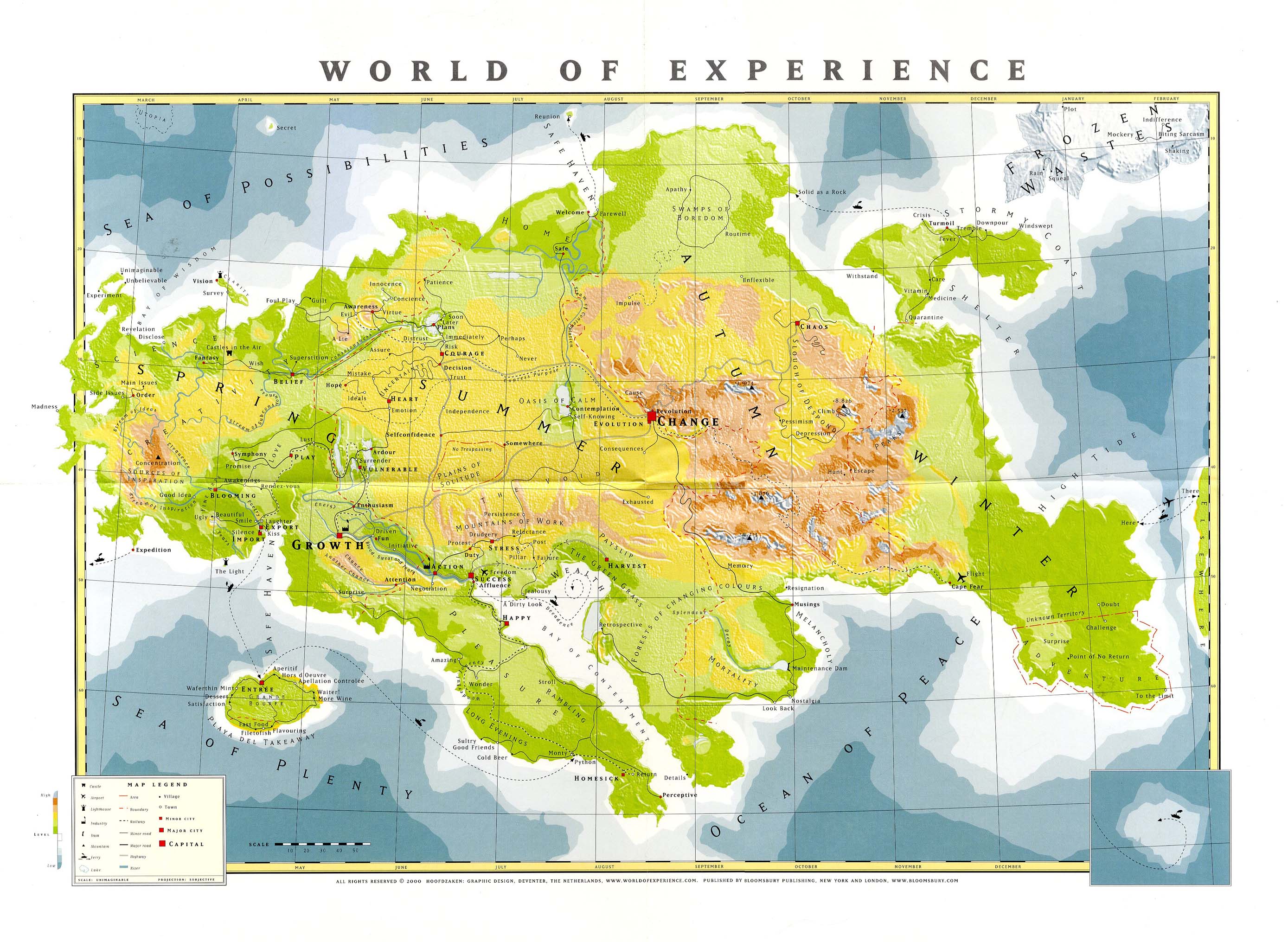
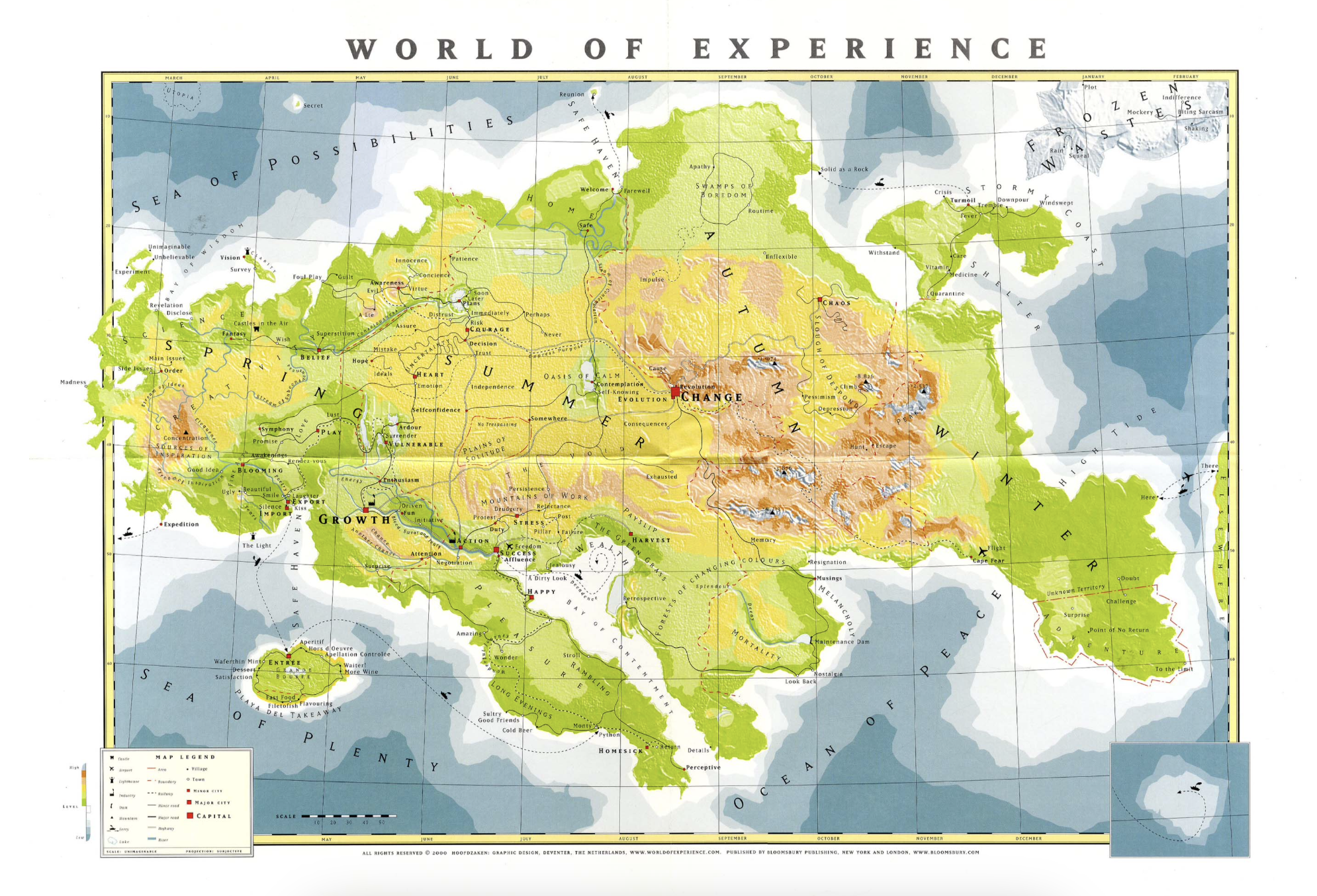
One of my favorite activities during the LEAD workshops was using the World of Experience as a tool to examine where I’ve been and where I want to go. If you’ve never seen it before, you can check out the World of Experience at the LEAD table in the fellowship hall after the service. In the meantime, picture this in your mind. A map that, at first glance, looks like it could be a two-dimensional representation of the Earth. On closer inspection, however, the familiar continents and oceans are replaced by other geographies, named for elements of the human experience. For example, the sea of possibilities, mountains of work, and plains of solitude.
On several occasions we used the World of Experience as a way to articulate the challenges or adventures in our past and present, and where we hoped to navigate in the future. In all of my conversations, my partners shared their journeys with unapologetic honesty, and invited the same vulnerability from me. The guiding principles practiced during the LEAD series were touchstones created by Parker Palmer and the Center for Courage and Renewal. One of these is “no fixing, saving, advising, or correcting each other.” In our type A problem solving culture, that’s a particularly tough one for many of us to follow, but it’s so important. Participating in the LEAD workshops reminded me that this congregation is a safe place for me, where my wild animal soul can show itself. That’s how I experience moments of mystery and wonder–when I feel truly seen and understood.
This year I attended General Assembly, the Unitarian Universalist Association’s annual gathering, for the first time. I had long wanted to experience GA, but to be honest I was also super anxious about it. When I arrived in Pittsburgh and checked into my airbnb, I texted Gay and Elizabeth. What am I doing here? I asked them. Of course, they were both kind and reassuring. I felt their hugs from 250 miles away. Then I arrived at the convention center, and I found Diane and Bruce and I knew everything would be ok. I had tacos with LeeAnn, and reconnected with folks who I first met at UUCA but who have moved on to other churches, and I made new friends. Knowing I was among so many people who share my UU values and commitment to repairing the world was exactly what I needed and hoped to experience at GA.
Of course, church is far from the only community that can nurture the soul. Some communities are intimate and some are vast but both can offer sustenance. My 16-year-old is a member of the seemingly infinite community of Swifties–devotees of pop star Taylor Swift. While her knowledge of Taylor Swift’s catalog and every minute detail of every concert on the Eras Tour may verge on obsessive, it is clear that she and other Swifties find joy and meaning in listening to the music, experiencing the music, and talking about the music with each other.
The community my 10-year-old thinks of as their second home is SMYAL, a DC-based organization that provides resources, connections, and activities for LGBTQIA+ young people ages 6 to 24. My kid has found kindred spirits, role models, and unwavering and unconditional support for their whole self. Their wild animal soul feels free to lead a dance party whenever they’re with their SMYAL peeps.
As Parker Palmer wrote, “If we want to support each other’s inner lives, we must remember a simple truth: the human soul does not want to be fixed, it wants simply to be seen and heard.” I am thankful to be a member of this and other communities where my soul can be seen and heard. Cultivating that kind of community–something greater than any of us individually, which can only be created with intention and love–is a sacred act. Sometimes we can build community, and other times we just stumble into it. We don’t always know where we will find community, or where we will experience that sensation of truly belonging, but we surely know it when we feel it. Some may call that providence, or divine intervention. To me, that certainty of belonging is a product of the mystery and wonder of the universe. Whatever you call it, I wish for you the comfort, safety, and nourishment of community, wherever you may find it. May it be so.

 You Ask a Lot of Questions