
You are currently browsing the category archive for the ‘writing’ category.

Where I’m From
(After George Ella Lyon)
I am from newspapers, from Little Debbie Oatmeal Cream Pies, and garage sale treasures.
I am from the copycat suburbs: nondescript, comfortable, safe for roller skating around the cul-de-sac.
I am from the dogwoods and azaleas, uneven lawns decorated with dandelions.
I am from board games and stubbornness, from Myrtle and Milton Jennings and Rosenblatt.
I am from the bakers and bringers of cakes and the suppressors of strong feelings.
From you can figure it outs and keep your chin ups.
I am from old hymns whistled in the kitchen, Nana’s white shawl over my shoulders in the pew, a dollar from her black patent leather pocketbook for the offering plate, from matzoh, and colored wax melting into the menorah.
I’m from Santa Monica, and a village in Romania that no longer exists, and Hungary and Scotland and Ireland, from deviled eggs and chicken salad and Kraft macaroni and cheese.
From the chewing gum Papa gave Nana as an enticement, which she washed off in case of “love powders,” the trains Papa rode as a child after his mother died and he was unwanted, and the dance in Yonkers where Max first laid eyes on Sally, with her red hair and green dress.
I am from trunks and thick albums and framed, fading collages documenting all the moments from all the decades, and the people who we hardly recognize now.
Betsy Rosenblatt Rosso
May 3, 2016
How it came to be:
Because blessing is the theme for May at my church and because he is awesome, Rev. Aaron reminded us that the greatest blessing we can give to others is our whole selves.
At our worship team meeting last week, he shared with us this poem by Kentucky poet George Ella Lyon.
Where I’m From
I am from clothespins,
from Clorox and carbon-tetrachloride.
I am from the dirt under the back porch.
(Black, glistening,
it tasted like beets.)
I am from the forsythia bush
the Dutch elm
whose long-gone limbs I remember
as if they were my own.
I’m from fudge and eyeglasses,
from Imogene and Alafair.
I’m from the know-it-alls
and the pass-it-ons,
from Perk up! and Pipe down!
I’m from He restoreth my soul
with a cottonball lamb
and ten verses I can say myself.
I’m from Artemus and Billie’s Branch,
fried corn and strong coffee.
From the finger my grandfather lost
to the auger,
the eye my father shut to keep his sight.
Under my bed was a dress box
spilling old pictures,
a sift of lost faces
to drift beneath my dreams.
I am from those moments–
snapped before I budded —
leaf-fall from the family tree.
Then Rev. Aaron handed this out–like a mad lib for spiritual history.
I am from _______ (specific ordinary item), from _______ (product name) and _______.
I am from the _______ (home description… adjective, adjective, sensory detail).
I am from the _______ (plant, flower, natural item), the _______ (plant, flower, natural detail)
I am from _______ (family tradition) and _______ (family trait), from _______ (name of family member) and _______ (another family name) and _______ (family name).
I am from the _______ (description of family tendency) and _______ (another one).
From _______ (something you were told as a child) and _______ (another).
I am from (representation of religion, or lack of it). Further description.
I’m from _______ (place of birth and family ancestry), _______ (two food items representing your family).
From the _______ (specific family story about a specific person and detail), the _______ (another detail, and the _______ (another detail about another family member).
I am from _______ (location of family pictures, mementos, archives and several more lines indicating their worth).
All of us filled in the blanks, and then we shared a glimpse of our histories and our souls, visualizing the house on top of the mountain in China where you could watch the storms roll in, tasting the grilled cheese like mom learned to make in the orphanage, hearing the crack of baseballs.
Rev. Aaron invited us to share our poems with the congregation as the call to worship in the service. Also he gave us handmade Bhutanese paper to hand write our poems on. For some reason this was the hardest part of the whole thing–overcoming my feeling that my words were somehow unworthy of the paper. He convinced me that the paper was waiting for my words.
When we give ourselves as blessings, we invite others to do the same. So today I read my poem and I shared my blessing, with people I love, friends and acquaintances, and total strangers, seen and unseen.
You can watch the service here. (Click on Archives, then on Sunday worship 11:15am Sunday, May 8, 2016–you’re welcome to watch the whole service, or you can skip to around 8minutes 30 seconds to find my poem)
If you write your own version of “Where I’m From,” I’d love to read it. Share your blessing!
Share this:

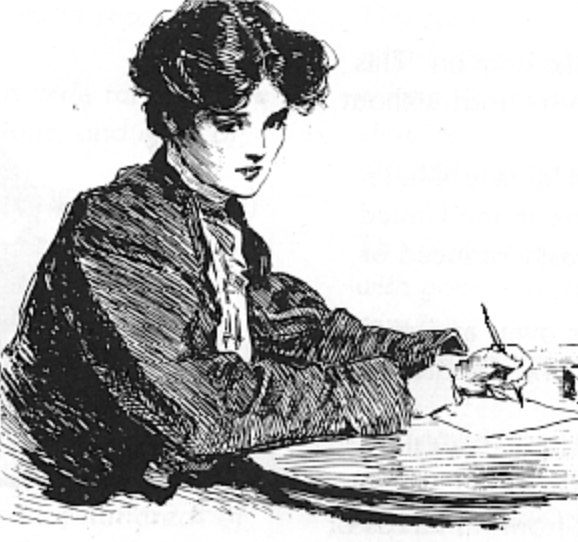 I’ve been volunteering once a week in Zoe’s class this year to help kids with reading and writing. Next week is my last time in the classroom for the year. As I’ve written here before, it’s been a wonderful experience. Recently the class has been working on writing letters, so I wrote them one of my own.
May 29, 2015
Dear Zoe, Zain, Ryan, Parin, Morgan, Madeleine, Lillian, Kevin, Kari, José, Jonathan, Jon, Jeremy, Jackson, Isabel, Hannah, Denis, Clare, Christopher, Bryant, Brenda, Ben, Angela, and Ms. deOlazo,
Thank you so much for welcoming me into your classroom as a volunteer this year! I have really enjoyed getting to know all of you and working with you to strengthen your writing and reading skills.
I have been impressed by how hard you have worked, how creative you have been, and all the great questions you have asked. I’ve seen your reading and writing grow so much throughout the year and I am so proud of you! You’ve written beautiful haikus, funny limericks, lovely letters, bold book reviews, and more. I’m always interested to know what you’re reading and I love seeing it when you get really wrapped up in a book. I love your enthusiasm for the stories that Ms. D reads to the class and how you can’t wait to find out what happens next.
Just as much as you’ve improved your reading and writing, you’ve also grown as people. I like how you are so generous in helping each other when your friends get stuck or need to know how a word is spelled. I like how engaged you are in the games and activities that Ms. deOlazo comes up with, like the concentration exercises, stretching and meditation, and even four corners. I know that the abilities you are developing now will be incredibly useful to you as you move through school and into life. It’s wonderful that Ms. D is teaching you how to work together, how to solve problems in interesting ways, and how to be flexible and imaginative. Those are important skills for everyone to have.
I will miss spending time with your class so much! I hope you have a wonderful summer and that I will see you all next fall.
Yours,
Ms. Rosso
Share this:

 I should have changed the station when I heard Terry Gross say that her guest on Fresh Air was going to be the New York Times reporter covering Ukraine who was one of the first people on the scene of the wreckage of the Malaysian Airlines passenger plane that was shot down by some evil and selfish people over there. But somehow I didn’t, and so I listened while she described what it looked like when she was walking through the rubble and how some people’s bodies were completely intact, still buckled into their seats, because the plane had exploded in the air instead of just crashing into the ground. When she said, “especially the children,” I had to change the station. And it was too late, because now that image is in my brain and won’t go away.
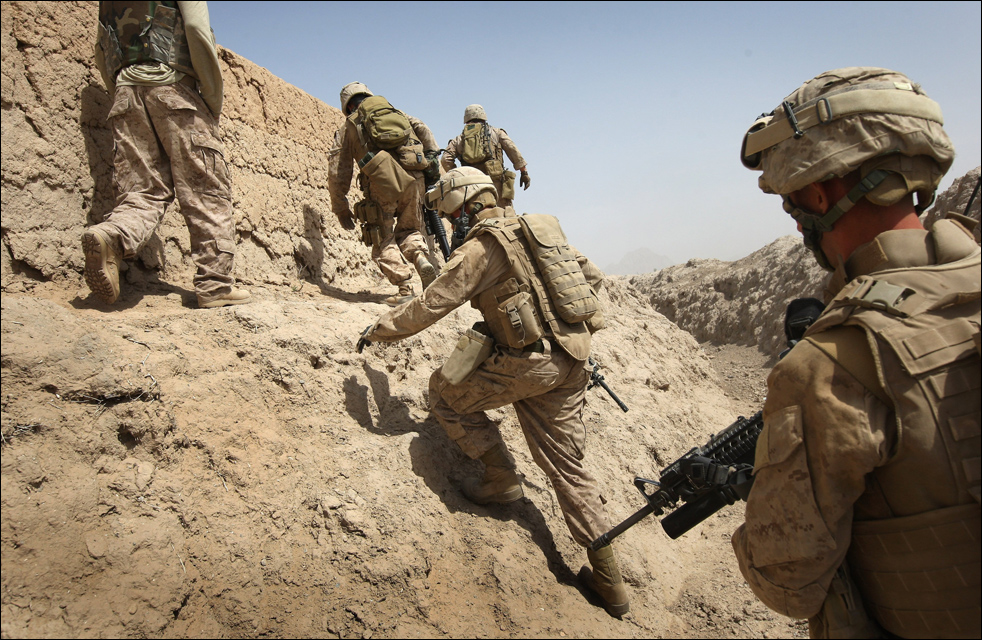
Yesterday, immediately after hearing the fragment of that story on NPR, I conducted a phone interview with a medically retired Marine. As part of my contract work as a writer for the Navy-Marine Corps Relief Society, it is a privilege for me to interview many former Marines and Sailors and their families about their involvement with the Society, as well as interviewing the staff members and volunteers who work with clients. I have no military background so these conversations are usually fascinating and revelatory to me.
Many of the retired Marines and Sailors I speak with were severely wounded while deployed. At a minimum, they have post-traumatic stress disorder and traumatic brain injuries. Many also have a variety of severe physical issues as well. Many have struggled with addiction since returning to civilian life and trying to deal with the mental and physical anguish they returned to in the States. Typically I ask about their service–when they joined, where they served, what caused the injury that sent them home. Typically they give me the highlights. “I was blown up during my second deployment in Afghanistan.” Or “I was on patrol in Fallujah when we hit an IED.”
Yesterday the Marine I spoke with took me almost minute by minute through the day when he was hit multiple times by Taliban attacks while on a rescue mission. He just kept talking and I kept listening and writing down everything he said. It seems like the least I can do to listen to his story. And my job is to share his story–chiefly the part where he gets connected with a Navy-Marine Corps Relief Society visiting combat casualty assistance nurse–so other servicemembers like him, or their spouses or moms or siblings can find out there’s another way to get help. So these guys feel less alone.
I am thankful that this is part of my work and it is an honor to do this very small thing to help. But it is hard to hear. It is hard to hear horrible things on the news. It is hard to hear tragedies that strike people I know or the friends or family members of people I know. It is hard to understand why our military is sent out to do unbelievably dangerous work that changes their lives not usually for the better, and for questionable reasons when you hear the news today and know that militants in Iraq are forcing innocent families to die by starvation and no one is able to stop it. Hearing these things just crushes my heart. But I cannot ignore them, and part of me feels responsible for being a witness to the suffering. Still, it crushes my heart.
Share this:

When I’m driving and am powerless to harness them, the ideas and deliberations zoom in and out of my head. Sometimes I feel like my brain actually hurts because of the volume and velocity of thoughts. I had a conversation recently over milkshakes with a friend who is an excellent writer but that’s not what he does chiefly at his job. He is trying to figure out how much of a creative writer is in him, waiting to emerge. He said he doesn’t necessarily feel like he’s one of those people who is compelled to write.
I am one of those people, but so often I hold myself back. My overdeveloped sense of empathy serves as an effective censor. I am frozen by my concern for how others might feel about what I have to say, even strangers. This temperance toward my writing makes me feel like less of a writer. I’ve heard that the thing you love most about your significant other can also become the thing you most despise. I suspect this is also true about yourself.
Share this:

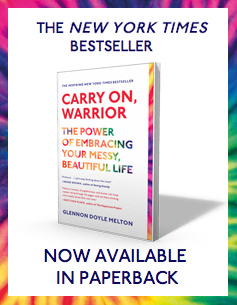 Later this month I am participating in Glennon Melton’s Messy, Beautiful Warriors project on Momastery. This means I will be writing a post that is linked to Momastery and maybe, if I’m lucky, it will be reposted there. I am a big fan of Glennon so I am excited about this opportunity.
What’s in it for you? A free book! Because I said I would write about being a messy, beautiful warrior, Glennon sent me a copy of her book to give away. I own it and I’ve read it and it’s great. Randy even read it, and he mostly reads tech blogs and news and books about programming, so that’s a testimonial right there.
Any reader who makes a thoughtful comment on my blog in April, and who says he or she would like to be entered in the drawing for the book, will be eligible.
Coming soon–reflections on birthdays and messy beauty!
Share this:

On Thursday night Barbara Kingsolver, one of my favorite writers, kicked off the book tour for her new novel Flight Behavior at the Washington National Cathedral, one of my favorite places. And I went with two friends and no children. What joy.
She read most of the first chapter of the book, which was completely riveting and made me want to go home and stay up all night reading it. Except for practical reasons I can no longer stay up all night reading and also I’m waiting for my mom to read her copy of the book so I can borrow it.
After the reading, an audience member asked Kingsolver how much of her own life experiences show up in her books. Kingsolver said she doesn’t write about herself, but sometimes moments that strike her will reappear in a novel. She and her husband currently live on and operate a sheep farm in Southwest Virginia. She had read a veterinary manual about lambing, in preparation for helping sheep give birth of course, and read about a method for reviving a calf who was born not breathing. The technique involved grasping the lambs legs by the feet and swinging the lamb around your head very quickly so the force of the air or spinning or something clears the mucus out of the lamb’s airway. Then one day she was called upon to employ this method, and she did, and it worked. Her husband, plowing a nearby field on the tractor, looked over and saw her doing this and stopped what he was doing. “He hadn’t read this particular manual so he had no idea why I was swinging a lamb around in the air over my head,” she explained. So when you read Flight Behavior look for the lambing scene.
Kingsolver, trained as a biologist, said writing a novel for her is “like doing an experiment.” She develops a hypothesis, then creates a plot to test it. Then she comes up with characters whose actions bear out the hypothesis. That’s the first draft.
“The real art,” she says, however, “is revision. I love revision.” Writing the first draft is like weeding a garden, or hoeing a row of potatoes, necessary but not that much fun, she explained. To go back and revise is fun.
“When you know the ending, you can go back and rewrite the beginning so they match. The beginning and ending throw light on each other,” she said. She writes hundreds of drafts of each book. “I could revise forever because it’s so much fun.” Tell that to any high school student.
Her insight that I most need to take to heart. When she’s writing, she doesn’t think of her audience. “I labor alone in a room not thinking of all of you. I do not think about what people expect of me. That would pull me off center from what I have to give. I think about what I have to give in the world. There are so many books out there, but no one has been me before.”

 You Ask a Lot of Questions