
You are currently browsing the category archive for the ‘volunteering’ category.
Today our church service was led by members of our worship team, including me. I had the opportunity to share a reflection–like a sermon but shorter. Here’s what I said. If you want to watch, the archived video will be posted here shortly.
 Think about Juicy Fruit gum. Do you remember what it smells like? To me it smells like the small Methodist church where my Nana and Papa worshiped in High Point, North Carolina. Everyone knew my grandparents—so everyone knew me—and welcomed me warmly when we visited during every school holiday. Mr. McSwain always gave me a piece of Juicy Fruit gum after Sunday school. That gum, my Nana’s white shawl wrapped around me in the pew, her smooth black patent leather pocketbook, from which she extracted a dollar bill for me to put in the offering plate, my great Aunt Millie singing soprano in the choir, and my mom’s favorite cousin Rhonda playing the organ, not to mention my Nana’s rock solid devotion to Jesus, made me feel at home. I belonged.
For me, church and Christianity had everything to do with those warm, comforting feelings and nothing whatsoever to do with theology.
Meanwhile, back at home, my dad was—and still is—Jewish, and we enjoyed celebrating Hanukkah and Passover as a family. But our annual forays to synagogue for high holy days left me confused. I didn’t understand Hebrew and I didn’t know anyone besides my dad. Judaism seemed remote, whereas Christianity was intimate.
So when I was 12, I became Presbyterian. I helped build houses in West Virginia, and taught Vacation Bible School to four-year-olds. For my first college spring break I went to Florida with my Presbyterian fellowship group, not to lie on the beach, but to build a tent city for migrant workers after Hurricane Andrew devastated the town where they lived. After college, when I moved to Arlington, I joined a wonderful Presbyterian church here and met people who I now know are my friends for life. I was chosen to be an elder—even though I was only in my 20s—the equivalent of a member of the board. In all of these churches, I loved the people, the music, and the opportunity to serve. I admit I glossed over some of the words of the traditional prayers, and didn’t dwell on the scripture. I convinced myself it didn’t really matter if I didn’t believe what everyone else did, as long as I felt at home. Then, when I met my husband in 2003, he asked me a lot of tough questions about my theology, and I realized it did matter.
After a bit of searching, I started attending a Unitarian Universalist church—not this one. I was excited to finally find a church whose theology matched mine. Yet, in the middle of that large congregation, I still felt alone. I struggled to find community and a sense of belonging. I made a few friends there, and improbably sang in one of the choirs, but most of the time I came and went on Sunday morning unrecognized, and the big events in our family were dealt with impersonally or went unnoticed by the church.
In January 2015 my friend Dana Cook, who I’ve known since our now nine-year-old daughters attended preschool here together, invited us to UUCA. I told myself I didn’t have to come back if I didn’t like the service, because I was feeling a little down on church, and braced for disappointment.
But leaving worship that morning I was blown away—completely surprised and thrilled by Rev. Aaron’s thoughtful and challenging sermon, and by the warm welcome I had received here. I knew I would return the next Sunday.
In the year and a half since my kids and I started coming to UUCA, we have been fully embraced by the congregation. Here, I can honor my Christian and Jewish roots but still nurture my own theology. I feel confident that what my kids learn here is in keeping with our family’s values and beliefs and that all of us will be enriched by the variety of perspectives, backgrounds, and experiences that members of our community bring with them.
Brené Brown, a researcher and author whose books and TED talk I highly recommend, wrote, “Authenticity is a collection of choices that we have to make every day. It’s about the choice to show up and be real. The choice to be honest. The choice to let our true selves be seen.”
What’s been transformative about being my whole self here has been the unexpected opportunities I’ve found to be with your whole selves, when you’re making that choice to show up and be real, creating space for the kind of conversations you don’t usually have with strangers.
The first opportunity I found here to cultivate those connections was with the covenant group I agreed to co-facilitate with Mary Pike last fall. I had only met Mary a couple times when she taught my daughter’s RE class. I had no idea how cool or what an intuitive leader she was. I had never even been in a covenant group before. All but one member of the group were strangers to me in October.
But then we spent time together. Exploring what matters to us and why we matter. Sharing our insecurities, fears, hopes, and joys. Revealing our true selves, knowing that we would be fully listened to and heard, and never judged. If you haven’t been part of a covenant group, this might sound ridiculous to you, or even terrifying. But actually, this kind of openness is a balm for the soul.
At our last meeting, we talked about how often we would rush to church for our meetings after a long day, feeling preoccupied or stressed out. But always by the end of our time together, the feeling was relief. Like sinking into your favorite armchair. It is a relief to be able to bring your true self into the room and be seen and loved. Stone by stone, we were dismantling those walls we usually fortify between strangers and ourselves. The walls around our deep truths crumbled, as we felt safe to share with the group.
Another transformative experience I’ve had here has been in the circles of trust retreat series that Rev. Aaron brought to UUCA last fall. Based on the work of Quaker author and activist Parker Palmer, the premise of circles of trust is that everyone has an inner teacher. Whether you call that your heart, soul, spirit, or some other name, it is the source of strength within. As we all know, however, sometimes the noise of our lives can drown out the still, small voice of that inner teacher. Or sometimes we know exactly what our inner teacher is trying to say but we want to cover our ears and squeeze our eyes shut because we don’t want to hear what we know is the truth. So in circles of trust, you spend time reading, writing, thinking, and talking to enable your inner teacher to find its clear, strong voice. Sometimes this requires the help of others.
To help each other hear the inner teacher with greater clarity, what we practice in circles of trust is asking open, honest questions. When someone is brave enough to share a challenge he is facing, we help him find new ways of understanding or looking at the problem without offering advice, trying to fix his problem ourselves, or telling him about when that same thing happened to us. Instead we ask questions that require him to look within. Questions that don’t have yes or no answers. Questions that use metaphors to help him visualize himself and his dilemma in a new way.
The result of this process is we learn about ourselves. We learn what shadows lurk in our spirits and how we can channel our shadow sides, because they are part of who we are. We can’t ignore or deny them. For me, one of those shadows is the need for control. My internal struggle when things don’t go as planned can be intense, but I have come to understand the silver lining of this shadow is a gift for taking care of business. I’ve also learned that, even if I can’t—and shouldn’t—eliminate my shadow, I can work to modulate it. Fortunately I have the opportunity to do that many times a day as a parent, because there’s a lot about raising kids that you can’t control.
We learn about the ways we stand in what Parker Palmer calls the tragic gap—the space between what is and what could be, and how to hold that tension with as much grace as we can muster, even though we might be tempted to just run away. For me the tragic gap appears both locally and globally. I stand in the tragic gap whenever I don’t talk to my kids the way I should. This often happens in those moments I mentioned earlier when I cannot control their behavior, which is to say, most moments.
I stand in the tragic gap when I read Bryan Stevenson’s Just Mercy. I am angry about the innocent people whose lives have been destroyed by our broken justice system, uncertain if creating a fair justice system is even possible, yet still inspired by the dedication of Stevenson and his colleagues at the Equal Justice Initiative.
Exploring ways to handle these tensions and contradictions, and even simply learning the vocabulary to identify them, has been transformative. When was the last time you faced a problem at home, at school, at work, or at church that had a quick and easy answer? To reach real and thoughtful solutions we have to ask good questions. Open, honest questions. Of ourselves and each other.
Not surprisingly, in the course of asking these open, honest questions, we learn about each other. Really learn about each other. We see each other’s true selves and hear each other’s truths. And just as the members of my covenant group experienced, it brings a feeling of relief. Your problems may not be solved. The world’s problems are definitely not solved. But you are not alone. You are held, accepted, and loved for who you are. You belong. That sense of belonging, the profound comfort in a world that can be so uncomfortable, is transformative. When I am truly seen and heard, I am vastly more capable of truly seeing and hearing you. Then I can share with you a measure of that comfort and that belonging.
Share this:

 All though high school I was a volunteer at Fairfax Hospital. They used to call them candy stripers, and yes I wore a goofy red and white striped jumper, but technically I was a member of the hospital auxiliary. The volunteers–both teenagers and adults–would sit in a room and wait for calls to come in from various wards and labs in the hospital. The day chairman–Lynn, a really great woman–would announce the job and whoever wanted it would grab the slip of paper on which she’d written down the task. Blood bank to 9 west, or 24-urine from 6 east to lab, or wheel someone from outpatient surgery to the lobby to be picked up by his family, etc.
I loved doing this. I never had the slightest interest in becoming a nurse or a doctor or anything else medical, but I really enjoyed helping people at the hospital. From that experience and from my own experience in hospitals, I have come to recognize that nurses are HEROES. During the labor and delivery of both my children, it was the nurses who did the lionesses’ share of the work. And when my kids have had surgeries, the doctors seemed to breeze in and out in a flash while the nurses helped us prepare and recover from the procedures. If you’ve ever been in a hospital, you know what I’m talking about.
So one of my favorite parts of my work for the Navy-Marine Corps Relief Society has always been interviewing the Society’s phenomenal visiting nurses. NMCRS has a cadre of several dozen nurses working around the country with combat-injured veterans, new moms and their babies, and retired service members and their spouses. The nurses visit whenever needed and for as long as they are needed, at absolutely no cost to the patient. They provide equal parts empathy, compassion, and education in addition to any actual medical assistance. They are counselors, cheerleaders, job coaches, social workers, surrogate moms and grandmas. They are there 24/7 for their patients.
Today is the last day of National Nurses Week, which began last Friday on Florence Nightingale’s birthday.
Here are excerpts from and links to the five profiles I wrote of NMCRS nurses. They are heroes, not only to all of their patients, but to me.
Greta Ellison:
In New Orleans, Louisiana in the late 80s, next to Tulane Medical Center, was the Veterans Administration hospital and Charity Hospital. While in junior high and high school, Greta Ellison would take the bus after school to Tulane, where her mother worked. Walking to the Medical Center, she would see patients and would-be patients with an array of injuries and ailments who were seeking medical care and other kinds of help as well. The need was vast, she observed. “It was utter chaos,” she said. “I had this extreme sadness and empathy at the same time, and I didn’t know what to do.”
When she was a senior in high school, a friend of Ellison’s was in an accident and was admitted to the intensive care unit at the charity hospital. She went to visit and was appalled by the patients lining the halls, and the hospital overrun with sick people. When she buzzed for admittance to the ICU, she was stunned by the angelic appearance, the poise, and the confidence of the nurse who welcomed her, gently but frankly explained the condition of her friend who she had come to visit, and guided her to his room. “I knew right then that I wanted to be a nurse,” Ellison recalled.
– See more at: http://legacy.planwithnmcrs.org/national-nurses-week-2016-greta-ellison/#sthash.t3ESy5h5.dpuf
Sandy Thompson:
(I really related to what she had to say about those early days of motherhood)
If you’ve never given birth, it’s easy to underestimate the intensity of the physical and emotional transition to parenthood. “It’s just a dark path and nobody shines a light on it,” explained NMCRS traditional visiting nurse Sandy Thompson. “I tell moms, ‘you’re not crazy. Your body will heal and you’ll return to yourself.’”
Thompson knows that those first days, weeks, and months of parenting a newborn can be beautiful but grueling. “The moms can’t tell day from night and they feel like they don’t have choices,” she said. “You empower them with personal choices. You show them that they do have skills. You’re cheerleading and building confidence. You’re pulling out people’s gifts.”
– See more at: http://legacy.planwithnmcrs.org/national-nurses-week-2016-sandy-thompson-shines-a-light-on-the-path-of-parenthood/#sthash.27mhFRPV.dpuf
Peggy Walker:
At 107 years old, Mary lives alone in her family home and walks out to the mailbox every day. She doesn’t drive anymore and someone comes in to clean, but she still pays her own bills. Mary’s independence is possible thanks to the Society’s visiting nurse, Peggy Walker, who checks in on Mary once a week, just as she does for dozens of other Navy and Marine Corps retirees or their spouses. “It’s so rewarding to be able to help people live safely at home, if that’s what they want,” Walker said. “Mary inspires me.”
No stranger to the services of the Navy-Marine Corps Relief Society, at 27 Mary had a high-risk pregnancy and had to deliver at a civilian hospital instead of the Navy hospital. Her baby girl weighed only three pounds. “She didn’t have the money for a civilian hospital,” Walker explained. “She asked her husband, ‘how are we going to pay for this?’ and he said, ‘don’t worry about it. I went to Navy Relief and they’re going to pay for it.’” Mary’s daughter is now 80 and lives across the street from Mary.
– See more at: http://legacy.planwithnmcrs.org/national-nurses-week-2016-peggy-walker/#sthash.lLwEAQhQ.dpuf
Diana Patterson:
(I wondered if she became a nurse hoping she would work with a doctor who looked like George Clooney one day. I didn’t ask that question.)
As a high school student, Diana Patterson discovered nursing through the television screen. “I used to watch ER and that got me hooked,” she laughed. But after earning her bachelor’s degree in public health—thinking she would go into medical administration—she went to nursing school and realized she loved both direct patient care and mentoring other nurses. She returned to school once again to pursue a master’s degree so she could teach nursing.
Meanwhile, Patterson’s professional interests merged with her personal life when her brother deployed to Iraq in 2004 with the Army. “When I was in nursing school I had the opportunity to meet an admiral,” Patterson recalled. “He asked me if I could have any job, what would it be. I told him I would love to work with returning soldiers with PTSD. When my brother came back from Iraq I started hearing about the things he and his friends had gone through, and I was hoping there was something to help them.”
Esther Valier:
Trusting her own instincts and her body’s ability to do what it was meant to do, Esther Valier gave birth to her daughter Leala (her second child) at home in rural Arizona in 1980, even after her physician fired her as a patient, refusing to provide prenatal care after she told him her birth plan. Unbeknownst to Valier, her daughter had an unusual congenital defect in which a small section of blood vessels in her intestines had atrophied, causing the baby to become extremely sick when she was only a few days old, jaundiced with a high bilirubin count. The local hospital rushed mother and child by ambulance to Tucson, more than three hours away, where they were better equipped to care for Leala, who required abdominal surgery a few days later. Valier and Leala stayed in Tucson for three-and-a-half weeks, which changed Valier’s life.
“My experience in the hospital with the nursing staff motivated me to become a nurse,” Valier explained. “The care we received, the role modeling from the nurses who were taking care of Leala launched my devotion to nursing.”
– See more at: http://legacy.planwithnmcrs.org/national-nurses-week-2016-esther-valier/#sthash.nhalh36a.dpuf
Share this:

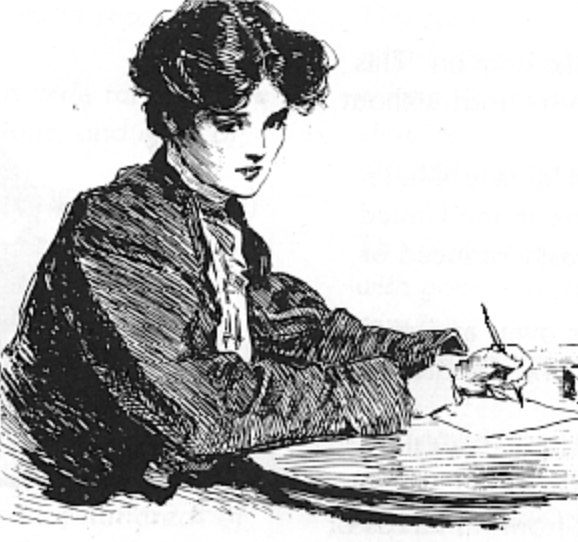 I’ve been volunteering once a week in Zoe’s class this year to help kids with reading and writing. Next week is my last time in the classroom for the year. As I’ve written here before, it’s been a wonderful experience. Recently the class has been working on writing letters, so I wrote them one of my own.
May 29, 2015
Dear Zoe, Zain, Ryan, Parin, Morgan, Madeleine, Lillian, Kevin, Kari, José, Jonathan, Jon, Jeremy, Jackson, Isabel, Hannah, Denis, Clare, Christopher, Bryant, Brenda, Ben, Angela, and Ms. deOlazo,
Thank you so much for welcoming me into your classroom as a volunteer this year! I have really enjoyed getting to know all of you and working with you to strengthen your writing and reading skills.
I have been impressed by how hard you have worked, how creative you have been, and all the great questions you have asked. I’ve seen your reading and writing grow so much throughout the year and I am so proud of you! You’ve written beautiful haikus, funny limericks, lovely letters, bold book reviews, and more. I’m always interested to know what you’re reading and I love seeing it when you get really wrapped up in a book. I love your enthusiasm for the stories that Ms. D reads to the class and how you can’t wait to find out what happens next.
Just as much as you’ve improved your reading and writing, you’ve also grown as people. I like how you are so generous in helping each other when your friends get stuck or need to know how a word is spelled. I like how engaged you are in the games and activities that Ms. deOlazo comes up with, like the concentration exercises, stretching and meditation, and even four corners. I know that the abilities you are developing now will be incredibly useful to you as you move through school and into life. It’s wonderful that Ms. D is teaching you how to work together, how to solve problems in interesting ways, and how to be flexible and imaginative. Those are important skills for everyone to have.
I will miss spending time with your class so much! I hope you have a wonderful summer and that I will see you all next fall.
Yours,
Ms. Rosso
Share this:

 Today I volunteered in Zoe’s first-grade classroom for the first time. Her teacher had asked if I would come in and read with kids. When I arrived, she handed me an index card with five kids’ names on it. I read about the life cycle of frogs, about goats (I learned there are more than 600 kinds), about how monsters make their meals (lots of metal junk), about Teeny Tiny Tina, about a tricky Grandpa, and about Elephant and Piggie dealing with a bird who makes himself at home on Elephant’s head.
Zoe’s teacher has signs posted all over the room about how to read–strategies for sounding out words, techniques for reading with partners, questions to ask yourself to help you understand what you’re reading. I’d attended a reading celebration in the classroom already so I was familiar with the techniques. I’ve loved learning about how first grade works now because it seems completely different than it was in 1981 when I was in it. The options for reading with partners include choral reading (reading in unison), taking turns page by page, or echoing. With every book I read with every student, I asked how he or she wanted to read that one. When L. and I were going to read There Is a Bird on Your Head he chose echoing. L. is a fairly fluent reader, and I thought echoing was really for kids who are still trying to sound out words, but it was his choice. And, although it took a long time, echo reading with him–especially that book–was fun. He read with enthusiasm and expression, and I echoed. I realized I could simply mirror his expression or interpret the lines (which are short) in a slightly different way with different inflection. I could see the benefit to echo reading for a young reader to hear another way of doing it even as he’s exploring his way.
A few kids saw me carrying my card and wanted to know whose names were on it. One boy who is a friend of Zoe’s asked if I was going to read with him. When I said not today, he said he hoped I would read with him next time.
As I was leaving, the teacher thanked me and said I was welcome to read with the kids anytime, and asked if I would be willing to read to them aloud–as if this would be a significant and daring feat to accomplish. I said yes. She also said she appreciated me coming in because some of the kids don’t have anyone to read with them at home. Somehow I was startled by this. I realize there’s a wide socioeconomic spectrum in Zoe’s class, and probably some parents work multiple jobs. But the idea that no one would be reading to these kids at home was heartbreaking to me. Zoe has probably spent thousands and thousands of hours reading and being read to over the past six years–by parents, grandparents, teachers, babysitters, and whoever else was willing. All this good book time has made her the reader she is today. Thinking that some of these kids don’t get to enjoy that time and attention at home makes me want to go back soon and read with all of them. By the end of the year I will know everything there is to know about goats.

 You Ask a Lot of Questions